
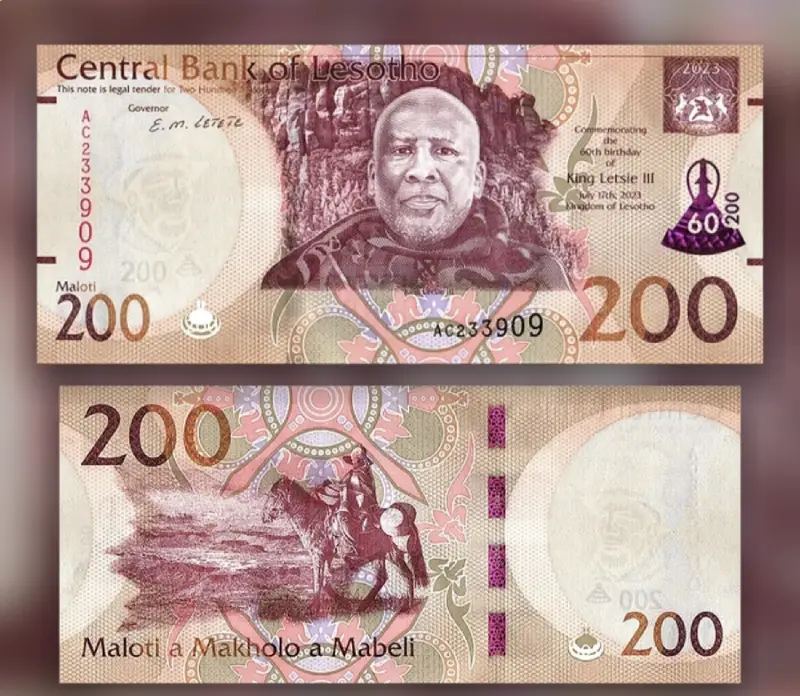
Understanding currency and payments in Lesotho helps you prepare for everyday purchases, accommodation and remote journeys. Travel with cash, a card and a separately stored backup.
Money in Lesotho is relatively straightforward once you understand one important fact:
The Lesotho loti and South African rand circulate side by side.
But how convenient each payment method is can change depending on where you are, what you are buying and how far you travel from major towns.
In Maseru, cards can be useful.
At smaller businesses and in more remote areas, cash can become much more important.
A sensible visitor strategy is simple:
Card + cash + backup.
Currency and Payments in Lesotho: What Money Should You Bring?
For most visitors, the safest approach is to have access to both cash and a bank card.
South African visitors can bring South African rand, which is legal tender in Lesotho.
International visitors travelling through South Africa may also find rand convenient because it can be used in both South Africa and Lesotho.
Once you are travelling, keep some cash available and never assume that every business, fuel stop, market or remote destination will accept your preferred card.
The Three-Money Rule
A simple way to organise your travel money is to use three layers.
1. Primary Card
Use your main bank card where it is accepted for larger purchases and transactions with formal businesses.
2. Cash
Keep cash available for:
- Small purchases
- Markets
- Informal businesses
- Remote travel
- Some transport
- Small food purchases
- Situations where electronic payment is unavailable
3. Backup
Keep a second card or emergency cash separately from your main wallet.
The important word is separately.
If your wallet disappears, you do not want your primary card, backup card and all your cash disappearing with it.
What Currency Does Lesotho Use?
Lesotho's official currency is the loti.
Its international currency code is LSL.
The singular is:
Loti
The plural is:
Maloti
One loti is divided into 100 lisente.
Visitors will encounter Lesotho banknotes and coins during ordinary transactions.
What Does “M” Mean on Prices?
In Lesotho, prices are commonly shown using M.
For example:
- M50
- M100
- M200
The “M” refers to maloti.
So if you see an accommodation rate, meal, product or service priced at M500, the amount is 500 maloti.
Can You Use South African Rand in Lesotho?
Yes.
The South African rand is legal tender in Lesotho.
This is particularly useful for South African visitors and international travellers entering Lesotho through South Africa.
You do not necessarily have to exchange rand into maloti simply because you crossed the border.
Why Can You Use Rand in Lesotho?
Lesotho participates in the Common Monetary Area, a regional monetary arrangement that links its currency closely with the South African rand.
Lesotho retains its own national currency while the loti is pegged to the rand. The Central Bank of Lesotho explains how the loti’s exchange-rate peg links it to the South African rand.
What Is the Exchange Rate Between the Loti and Rand?
The loti is pegged to the South African rand at par.
That means:
1 loti = 1 South African rand.
M100 therefore has the same nominal value as R100.
This makes money particularly straightforward for travellers arriving from South Africa.
Rand or Maloti — Which Should You Carry?
Either can work inside Lesotho.
During a normal trip, you may end up carrying both.
For example, you might arrive from South Africa with rand, make a purchase and receive some change in maloti.
That is not unusual.
The important issue is understanding what is in your wallet.
One Important Cross-Border Money Difference
Although South African rand is legal tender in Lesotho, do not assume that maloti will be equally convenient once you return to South Africa.
If you are leaving Lesotho, think about how much local cash you still have.
There is little reason to deliberately leave the country carrying a large amount of cash you do not expect to use afterward.
Cash vs Card in Lesotho
Should you carry cash or a card?
The practical answer is:
Both.
Each solves a different travel problem.
When Is a Card Useful?
Cards may be useful for purchases at places such as:
- Accommodation establishments
- Restaurants
- Supermarkets
- Shopping centres
- Larger retailers
- Formal businesses
- Some fuel stations
Acceptance varies.
If being able to pay by card is important, ask the individual business before committing to the purchase.
When Is Cash Useful?
Cash can be particularly useful for:
- Small shops
- Markets
- Informal purchases
- Some transport
- Small food purchases
- Rural communities
- Tips
- Remote travel
- Situations where electronic payment systems are unavailable
The farther your itinerary moves away from major commercial centres, the more important it becomes to think about your cash position before leaving.
Never Depend on One Payment Method
Technology can fail.
Networks can fail.
Cards can be declined.
ATMs may be unavailable.
Cash can be lost.
That is why redundancy is useful when travelling.
If one payment method fails, another should still be available.
Are Credit Cards Accepted in Lesotho?
International bank cards can be used in major towns and cities, but that should not be interpreted as universal card acceptance.
Smaller establishments may prefer cash or have limited electronic payment facilities.
Carry an alternative.
What About Visa and Mastercard?
Major international card networks may work where the merchant's payment system supports them.
Your actual ability to complete a transaction can depend on:
- The merchant
- Your card network
- Your issuing bank
- The payment terminal
- Connectivity
- Transaction settings
If you need to use a particular card, confirm acceptance with the business.
What About American Express?
Do not assume that American Express or other less commonly supported card networks will have the same level of acceptance as more widely used bank cards.
If one of these is your primary card, carry another payment method.
Can You Use Contactless Payments?
Some modern payment terminals may support contactless transactions.
But do not build your entire Lesotho payment strategy around tap-to-pay.
Carry a physical card and cash as alternatives.
What About Digital Wallets?
Digital wallets depend on several things working together:
- Your bank
- Your device
- Merchant terminals
- Network compatibility
- Connectivity
- Local payment infrastructure
Your phone can be useful.
It should not be your only wallet.
Are There ATMs in Lesotho?
Yes.
ATMs are available, particularly in Maseru and other major towns.
However, travellers should not assume an ATM will always be available or functioning exactly when they need one.
A better strategy is to organise cash before it becomes urgent.
Organise Cash While You Are in Maseru
If your next destination takes you into the mountains or a remote part of the country, deal with your cash requirements while you are still in Maseru or another major town.
Do not wait until you are far from major commercial areas before discovering that you need an ATM.
Before Using an ATM
Choose the Location Carefully
Where practical, use ATMs in well-used locations such as banks or busy commercial areas.
Understand Your Fees
Your own bank may charge international withdrawal or foreign-transaction fees.
Check its current fee structure before travelling.
Know Your Limits
Your card may have daily withdrawal or transaction limits.
Check these before your trip.
Protect Your PIN
Cover the keypad when entering your PIN and never give your PIN to another person.
Don't Wait Until Your Cash Is Gone
Look for an ATM before you reach your last banknote.
That gives you options if your first attempt does not work.
ATM Fees for International Visitors
International withdrawals may involve fees associated with your issuing bank, local banking arrangements or currency conversion.
These costs depend on the card and financial institution involved.
Check your bank's current international fee schedule before travelling.
Should You Tell Your Bank You're Travelling?
That depends on your bank.
Some financial institutions no longer require formal travel notifications, while others use security systems that may react to unusual foreign transactions.
Instead of assuming, check your bank's current procedure.
Also confirm:
- International card use
- Your PIN
- Withdrawal limits
- Transaction limits
- Foreign-transaction fees
- Emergency contact details
- Banking-app access
What If Your Card Is Declined?
A declined transaction does not necessarily mean there is a serious problem.
Possible causes include:
- Connectivity
- Merchant terminal problems
- Bank security controls
- Card settings
- Transaction limits
- Network problems
Use another legitimate payment method if one is available.
If necessary, contact your bank through its official channels.
Exchanging Foreign Currency in Lesotho
International visitors carrying currencies such as US dollars, euros or British pounds should use authorised foreign-exchange channels when they need usable local currency.
Do not rely on strangers offering informal currency exchange.
Using recognised financial institutions reduces unnecessary fraud, counterfeit and exchange-rate risks.
Should You Exchange Money at the Border?
Do not assume that every border crossing will offer the exact foreign-exchange service you need when you arrive.
Prepare before travelling, especially if you expect to arrive late or continue directly into areas away from Maseru.
South African Travellers
South African visitors have one major convenience:
You may already be carrying rand.
Because the South African rand is legal tender in Lesotho, you do not need to treat crossing into Lesotho like entering a country where your South African cash immediately becomes unusable.
You should still carry a sensible combination of payment options.
International Visitors Arriving Through South Africa
If your itinerary looks something like:
Home country → Johannesburg → Lesotho → South Africa
South African rand can be particularly practical because it can be used on both the South African and Lesotho portions of the journey.
Your own card fees and foreign-exchange arrangements still matter, so check them before departure.
Paying for Accommodation in Lesotho
Do not assume every guest house, hotel, lodge or homestay uses the same payment system.
Before booking, confirm:
- Accepted payment methods
- Deposit requirements
- Payment deadline
- Cancellation terms
- Currency
- Whether payment is online or on arrival
- Whether card facilities are available
The booking confirmation should be your source of truth for that particular stay.
Paying Lion Guard Guest House
When booking Lion Guard Guest House, confirm the currently accepted payment methods through the official booking or contact process.
Do not rely on an old blog article, social-media post, screenshot or old payment instruction.
Payment systems and policies can change.
The purpose of this guide is to explain how money works when travelling in Lesotho.
Your booking confirmation should explain how to pay Lion Guard for your specific reservation.
Verify Payment Details Before Sending Money
If somebody sends you new banking details claiming to represent your accommodation provider, tour operator, car-rental company or another travel business, verify the details through a trusted contact method before transferring money.
Do not assume a payment instruction is genuine simply because it appears to come from a familiar name.
Paying for Food in Maseru
Larger restaurants and formal establishments in Maseru may accept cards.
Smaller food businesses may prefer cash.
If you do not have cash and need to pay by card, ask before ordering.
Paying for Local Food
Some of the most interesting travel experiences come from small local businesses.
Those are also situations where cash can be particularly useful.
Keeping smaller denominations can make everyday transactions easier.
Shopping for Basotho Blankets
A Basotho blanket can become one of the most meaningful items you take home from Lesotho.
Payment methods can differ according to where you buy it.
Formal retailers may offer electronic payment, while smaller sellers may rely more heavily on cash.
Buying Crafts and Souvenirs
When buying crafts, artwork, traditional products or small souvenirs, having some cash available can be useful.
Where possible, support genuine local businesses and craftspeople.
Should You Bargain in Lesotho?
Do not assume every price is an invitation to negotiate.
Formal retailers generally use fixed prices.
Where negotiation is appropriate, keep it respectful.
Remember that what feels like a very small amount to a visitor may matter considerably more to the person who made or is selling the item.
Paying for Fuel
This is especially important for road trippers.
Do not assume every fuel station will accept your foreign card.
Before travelling into remote areas:
- Fill up in a major town
- Carry an appropriate amount of backup cash
- Check your route
- Avoid allowing both your fuel and payment options to run low
A payment problem should not become a transport problem.
Money for Semonkong and Maletsunyane Falls Trips
If you are travelling toward Semonkong, organise your payment options before leaving Maseru.
Consider:
- Cash
- Accommodation payments
- Activity payments
- Fuel
- Food
- Emergency funds
Remote travel should not be planned as though every destination operates like a large shopping centre.
Money for Katse and Highland Trips
The same principle applies to longer highland journeys:
Prepare before you climb.
Before leaving larger towns, organise your cash, fuel, food and essential purchases.
Money for Rural Lesotho
Cash becomes increasingly important when travelling in rural areas where payment infrastructure may be more limited.
Do not enter remote areas relying entirely on one foreign credit card.
Mobile Money in Lesotho
Mobile financial services form part of Lesotho's payment ecosystem and are used locally for transfers and payments.
However, short-term international visitors should not assume that local mobile money will automatically be their easiest or only payment solution.
Access can depend on factors such as:
- Registration requirements
- Account eligibility
- SIM access
- Service availability
- Merchant acceptance
For many short-term visitors, cash and internationally enabled bank cards are easier to plan around.
Money Tips for Business Travellers
If you are visiting Maseru for government work, consulting, meetings, training or corporate business, your expenses may include:
- Accommodation
- Meals
- Transport
- Fuel
- Printing
- Mobile services
- Other business expenses
Use a card where practical, but keep emergency cash available.
Keep Your Business Receipts
If your employer reimburses travel expenses, keep the receipts and invoices required by your organisation.
Photographing important receipts can provide a useful backup if the original is misplaced.
Money Tips for Families
Parents already have enough to manage while travelling.
Before leaving Maseru for a family day trip, check that you have:
- Cash
- Card
- Fuel
- Water
- Snacks
- Children's essentials
A little preparation can prevent a small payment problem from disrupting the entire outing.
Money Tips for Couples
A romantic road trip becomes considerably less romantic when neither person's card works and there is no cash.
Keep at least one backup payment method separate from the main wallet.
Money Tips for Adventure Travellers
Financial planning should happen before the trail.
Before travelling toward remote mountain destinations, think about:
- Accommodation
- Activities
- Fuel
- Food
- Transport
- Emergency cash
Adventure should involve mountains, not searching for an ATM.
Money Tips for Road Trippers
For a road trip, money and fuel belong in the same planning conversation.
Before leaving Maseru, check:
- Cash
- Card
- Fuel
- Phone
- Offline navigation
Then go.
How Much Cash Should You Carry?
There is no universal amount.
The appropriate amount depends on:
- Length of trip
- Destination
- Accommodation arrangements
- Transport
- Planned activities
- Number of travellers
- Whether major expenses are already paid
The goal is not to carry as much cash as possible.
The goal is to carry enough backup cash for your realistic plan.
Don't Carry Your Entire Holiday Budget in Cash
Cash solves one travel risk but creates another.
If all your money is carried as cash and it is lost or stolen, recovery can be difficult.
Balance convenience with security.
How to Divide Your Money
Main Wallet
Keep a modest amount of spending cash together with your primary card.
Backup
Keep a second card or emergency cash separately.
Secure Storage
Keep additional money and important items securely rather than carrying everything together.
Don't put everything in one place.
Smaller Notes Can Be Useful
Smaller denominations are convenient for small purchases and situations where change may be limited.
Avoid depending entirely on large notes for inexpensive transactions.
Check Your Change
When paying with cash, check your change before leaving.
That is ordinary travel discipline.
Know Which Currency You Have
Because rand and maloti can both appear during a Lesotho trip, pay attention to the notes you receive.
Know what is rand and what is maloti, especially if your journey later continues outside Lesotho.
Protect Your PIN
At ATMs and card terminals:
- Cover your PIN
- Never tell another person your PIN
- Keep control of your card where practical
- Watch the transaction where appropriate
ATM Safety
Where possible, choose an ATM in a secure, well-used location.
If something about the machine, location or people around it makes you uncomfortable, cancel the transaction and use another location.
What to Do If Your Card Is Lost or Stolen
Before travelling, save your bank's official international contact information.
If a card disappears, freeze or block it as quickly as possible using your bank's official procedures.
Many banking apps provide card-control features, although the exact options depend on your bank.
Your Phone Is Part of Your Payment Plan
If you rely on mobile banking, your phone becomes part of your financial infrastructure.
Keep it charged.
Carry a power bank when useful.
Know how you will access or recover your banking account if something goes wrong.
And never store sensitive passwords insecurely.
Internet and Electronic Payments
Electronic payments can depend on connectivity.
That is another reason cash remains useful, particularly when travelling outside major urban centres.
Should You Carry US Dollars?
Do not assume US dollars will be accepted for ordinary purchases in the same way as rand.
For everyday spending in Lesotho, the practical currencies are maloti and South African rand.
If you need to exchange another currency, use an authorised service.
What About Euros or British Pounds?
The same principle applies.
Do not expect ordinary shops and small businesses to act as foreign-exchange counters.
Use recognised financial channels to obtain usable currency.
A Simple 24-Hour Money Plan
Before Arrival
Check:
- Your cards
- International settings
- Transaction limits
- ATM limits
- Foreign fees
- Access to cash
After Arrival
Organise the money you expect to use for ordinary spending.
Before Leaving Maseru
Prepare your cash, fuel and other expenses for remote travel.
Before Leaving Lesotho
Review how much maloti you still have and what you will need for the next stage of your journey.
Simple.
Arriving Through Maseru Bridge
If you are entering Lesotho through Maseru Bridge from South Africa with rand, you already have currency that is legal tender in Lesotho.
You can then organise your remaining payment needs after arrival.
Your border documents and entry requirements are a separate part of your travel planning.
Arriving Late
Late arrivals require more preparation, not less.
Do not assume banking, foreign exchange or every commercial service will be available at the exact time you arrive.
Have your accommodation and immediate payment needs planned beforehand.
Lion Guard Travel Tip
Build a payment triangle:
Card for larger or formal purchases.
Cash for smaller purchases, backup and remote travel.
Backup stored separately.
If one side fails, you still have options.
Prepare Before Leaving Maseru
If tomorrow's itinerary includes Katse, Semonkong, remote villages, mountain roads or a long rural journey, organise your money before you leave.
Do not wait until you are already in the mountains to start thinking about cash.
Why Lion Guard Guest House Works as a Maseru Base
For travellers organising the Maseru portion of their trip, Lion Guard Guest House in Ha-Matala provides a comfortable base.
Guests have access to:
- Private bathroom
- Reliable hot water
- Free Wi-Fi
- In-room fridge
- Table and chair
- Secure enclosed parking
- Daily housekeeping
- Heater during colder weather
- Electric blanket
Wi-Fi can also help travellers check banking apps, review transactions, confirm bookings and contact businesses before the next day's journey.
The in-room fridge is useful for storing drinks, snacks and food before a road trip, while enclosed parking adds convenience for travellers using their own or rented vehicle.
15 Payment Mistakes to Avoid in Lesotho
1. Bringing Only a Card
Carry some cash too.
2. Bringing Only Cash
Keep another payment option as backup.
3. Assuming Every ATM Will Work
Organise cash before the situation becomes urgent.
4. Assuming Every Fuel Station Accepts Your Card
Carry backup cash.
5. Carrying Excessive Cash Unnecessarily
Balance convenience with security.
6. Keeping All Your Money in One Wallet
Separate your backup funds.
7. Ignoring Foreign-Transaction Fees
Check your bank's current fees before travelling.
8. Assuming US Dollars Are Everyday Spending Money
Use maloti or rand for ordinary transactions.
9. Exchanging Money Informally
Use authorised or recognised services.
10. Leaving Maseru Without Enough Cash for a Remote Trip
Prepare before departure.
11. Assuming Mobile Wallets Work Everywhere
Keep physical alternatives.
12. Carrying Only Large Notes
Smaller denominations can be useful.
13. Sending Accommodation Payments to Unverified Account Details
Verify payment details through a trusted channel first.
14. Forgetting the Loti-Rand Relationship
Remember that the currencies are pegged 1:1.
15. Forgetting About the Next Stage of Your Journey
If you are returning to South Africa, think ahead before leaving Lesotho with more local cash than you expect to use.
Frequently Asked Questions
What Currency Is Used in Lesotho?
Lesotho's official currency is the Lesotho loti, with the international currency code LSL.
The plural is maloti.
Can You Use South African Rand in Lesotho?
Yes.
The South African rand is legal tender in Lesotho.
Is the Lesotho Loti Equal to the Rand?
The loti is pegged at 1:1 to the South African rand.
Should I Bring Rand or Maloti?
Either can be useful within Lesotho.
South African visitors can use rand, while travellers may also receive and use maloti during their trip.
Can I Use My Credit Card in Lesotho?
International bank cards can be accepted in major towns and cities, but acceptance is not universal.
Carry cash or another payment method as backup.
Are Cards Accepted in Maseru?
Many formal businesses in Maseru may accept bank cards.
Always confirm with the individual business when card payment is essential.
Are There ATMs in Maseru?
Yes.
ATMs are available in Maseru, but travellers should not depend on one particular machine or wait until all their cash is gone before looking for one.
Are ATMs Available in Rural Lesotho?
Access can be more limited outside major towns.
Organise your cash before travelling into remote areas.
Can I Use a South African Bank Card in Lesotho?
A card enabled for suitable international or regional transactions may work at compatible merchants and ATMs.
Check your bank's settings, fees and terms before travelling.
Should I Carry Cash in Lesotho?
Yes.
Cash remains useful for small businesses, markets, remote travel and as a backup when electronic payment is unavailable.
Can I Use US Dollars in Lesotho?
Do not depend on US dollars for everyday purchases.
Use maloti or South African rand, and exchange other currencies through authorised channels when necessary.
Can I Use Euros or British Pounds?
Do not assume ordinary businesses will accept them.
Use recognised foreign-exchange services to obtain currency suitable for everyday spending.
Are Contactless Payments Available?
Some businesses may offer contactless payment, but travellers should not rely on it everywhere.
Is Mobile Money Used in Lesotho?
Yes.
Mobile financial services form part of Lesotho's payment system.
Short-term international visitors should still maintain practical cash and card alternatives rather than assuming they can immediately rely on local mobile money.
Do Fuel Stations Accept Cards?
Some may.
Card acceptance should not be assumed at every fuel station, particularly when travelling farther from major towns.
Carry a backup payment method.
What Money Should I Take Into the Mountains?
Carry enough cash for your expected expenses plus a reasonable emergency reserve.
Keep another payment method as backup where practical.
Should I Exchange Money Before Entering Lesotho?
South African visitors carrying rand already have currency that is legal tender in Lesotho.
Visitors arriving with other currencies should plan their foreign exchange and card access before travelling.
Can I Pay Lion Guard Guest House by Card?
Confirm Lion Guard Guest House's currently accepted payment methods when making your booking.
This prevents an evergreen travel article from giving you outdated payment information.
Should I Carry All My Holiday Money in Cash?
No.
Use a combination of cash, card and separately stored backup funds.
What Is the Best Payment Strategy for Lesotho?
Card + cash + backup.
That combination gives travellers greater flexibility when moving between Maseru and more remote destinations.
Travel Lesotho With Financial Confidence
Money should be the boring part of your holiday.
You should remember the mountains.
The villages.
The food.
The people.
The waterfalls.
The road trips.
The sunsets.
Not the card that wouldn't work.
Prepare before you arrive.
Understand the loti.
Know that rand is accepted.
Keep some cash.
Carry a card.
Store a backup separately.
Then stop worrying about how to pay and start thinking about where to go next.
Arrive prepared. Stay comfortably. Explore Lesotho.