
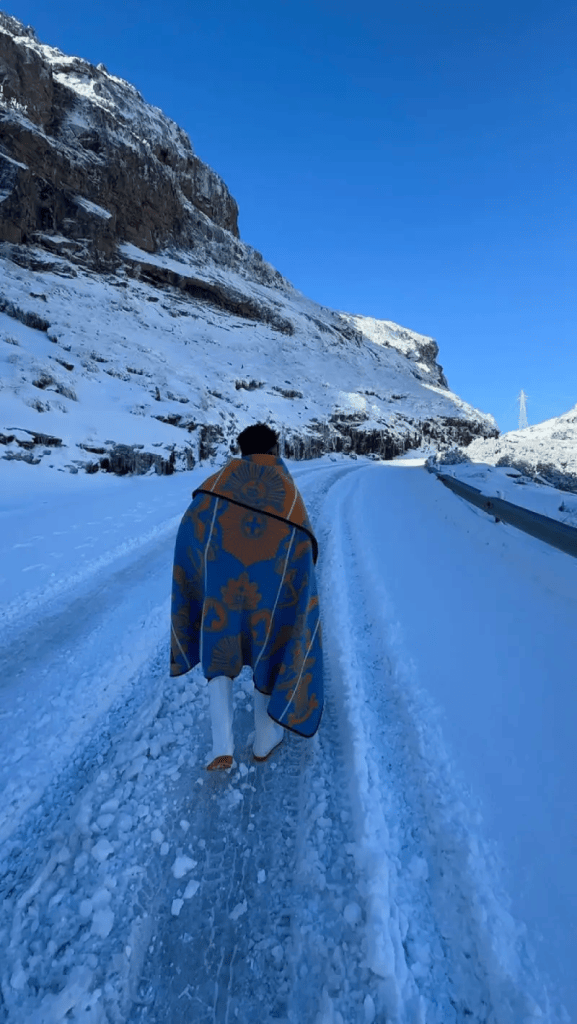
Understanding weather throughout the year in Lesotho helps you choose when to travel, what to pack and how to plan for changing mountain conditions.
There is no single best time to visit Lesotho.
There is the best time for the experience you want.
Want green mountain landscapes? Summer may appeal to you.
Want crisp mountain scenery and the possibility of snow? Think winter.
Want comfortable conditions for hiking and road trips? Autumn or spring may suit you.
Interested mainly in culture, history, food and Maseru? Those experiences can be enjoyed throughout the year.
The better question is therefore not simply:
“When should I visit Lesotho?”
It is:
“What do I want Lesotho to look and feel like when I arrive?”
One rule matters in every season: Lesotho is a high-altitude mountain country.
Weather can differ significantly between Maseru, the western lowlands, foothills and high mountain areas. A pleasant day in Maseru does not guarantee the same temperature, visibility, rain, wind, snow or road conditions higher in the mountains.
Maseru weather is not the same as highlands weather.
Always check a current forecast for the specific destination you intend to visit. Consult Lesotho Meteorological Services for official weather updates and its weekly weather brief.
Why Lesotho's Weather Changes So Much
Altitude changes everything.
Lesotho is one of the world's most elevated countries. Even its lowest areas are roughly 1,400 metres above sea level, while much of the country rises considerably higher.
That elevation influences:
- Temperature
- Rainfall
- Snow
- Frost
- Wind
- Day-to-night temperature changes
- Mountain weather
Lesotho is often called the Kingdom in the Sky, and the name fits its geography.
The entire country lies above 1,000 metres in elevation, while its highest point, Thabana Ntlenyana, rises to approximately 3,482 metres.
Mountain weather is therefore not confined to one small corner of the country.
Altitude is part of Lesotho's identity.
Understanding Lesotho's Climate
In broad terms, Lesotho's summers are generally warmer and wetter, while winters are generally colder and drier.
But that simple description does not tell the whole story.
Conditions vary according to elevation, location, season and the weather system affecting the country at the time.
For travellers, the practical lesson is simple:
Use the season to plan broadly and the current local forecast to plan specifically.
When Is the Rainy Season in Lesotho?
Broadly, rainfall is concentrated during the warmer part of the year, approximately October through April.
Summer rain helps create:
- Green landscapes
- Flowing rivers
- Agricultural activity
- Waterfall flow
- Dramatic mountain scenery
But rain can also affect:
- Hiking
- Gravel roads
- Visibility
- Outdoor activities
- Mountain driving
Summer travel therefore benefits from flexibility.
When Is the Drier Season?
The colder period from approximately May through September is generally drier.
But dry does not mean warm.
Winter can bring severe cold, frost, ice and snow, particularly at higher elevations.
Weather Throughout the Year in Lesotho: Four Seasons at a Glance
Summer: December to February
Think:
- Greener landscapes
- Warmer days
- Rain
- Thunderstorms
- Waterfalls
- Changing mountain weather
Summer can appeal to travellers interested in lush scenery, photography, waterfalls and road trips with appropriate weather awareness.
Autumn: March to May
Think:
- Cooling temperatures
- Hiking
- Scenic drives
- Photography
- Cultural exploration
- Changing landscapes
Autumn can offer an appealing balance between outdoor activity and cooler temperatures.
Winter: June to August
Think:
- Cold
- Frost
- Ice
- Snow potential
- Crisp winter scenery
- Warm accommodation after exploring
Winter can appeal to snow-seekers, photographers, couples and travellers interested in Lesotho's cold mountain character.
Spring: September to November
Think:
- Warming conditions
- Changing landscapes
- Hiking
- Road trips
- Photography
- Increasing rainfall later in the season
Spring can be an attractive transition between the cold of winter and the greener, wetter summer months.
Summer in Lesotho
Summer runs from December through February.
If your mental image of Lesotho is a cold, brown or snow-covered mountain country, summer may surprise you.
Rain can transform the landscape.
Grasslands become greener, rivers flow through valleys, fields become active and waterfalls can become more dramatic.
What Does Summer Feel Like?
Around lower-altitude areas such as Maseru, daytime conditions can feel warm.
But do not assume that means hot conditions everywhere.
Temperatures generally become cooler as elevation increases, and mountain weather can change quickly.
Summer Is the Wetter Season
Summer travellers should be prepared for:
- Rain
- Thunderstorms
- Cloud build-up
- Wet roads
- Changing visibility
- Altered outdoor plans
The answer is not necessarily to avoid summer.
It is to travel with flexibility.
Why Visit Lesotho in Summer?
Summer can make the country feel intensely alive.
The grasslands can become green, waterfalls may benefit from rainfall, agricultural landscapes become active and changing clouds can create dramatic photography.
For travellers who want a greener version of Lesotho, summer deserves consideration.
Summer Experiences
Depending on current weather and visitor arrangements, summer can work well for:
- Maletsunyane Falls
- Thaba Bosiu
- Morija
- Scenic drives
- Cultural attractions
- Village experiences
- Photography
- Maseru exploration
- Selected hiking activities
Always check current conditions before setting out.
Summer at Maletsunyane Falls
Rainfall can contribute to stronger waterfall flow and greener surrounding landscapes.
That can make Maletsunyane Falls particularly dramatic.
But rainfall can also affect roads, trails, visibility and outdoor safety.
Never chase a waterfall without checking the weather.
Summer Hiking
Summer hiking can be beautiful, but thunderstorms and rain deserve respect.
For mountain activities:
- Check the forecast
- Consider starting earlier
- Carry waterproof protection
- Take sufficient water
- Avoid exposed high terrain when thunderstorms threaten
- Be prepared to change the plan
Summer Photography
Summer can create striking contrasts between green valleys, dark clouds, sunlight, rivers and mountains.
For photographers, weather becomes part of the picture.
Just remember that getting the photograph should never take priority over weather or road safety.
What to Pack for Summer
Consider:
- Lightweight clothing
- Comfortable walking shoes
- Rain jacket
- Sun hat
- Sunglasses
- Sunscreen
- Water bottle
- Light warm layer
- Power bank
- Small daypack
And yes—a warm layer is still sensible in summer.
High-altitude areas and evenings can feel much cooler than a warm Maseru afternoon.
Layers are your friend.
Autumn in Lesotho
Autumn runs from March through May.
For many travellers, it can offer an attractive balance.
Summer conditions begin transitioning, temperatures become cooler and outdoor exploration can feel more comfortable.
Why Visit Lesotho in Autumn?
Autumn can suit travellers interested in:
- Hiking
- Cultural trips
- Scenic drives
- Photography
- Couples' getaways
- Maseru exploration
- Historical attractions
- Road trips
It can be particularly appealing if you want active days without deliberately choosing the deepest winter cold.
Autumn and Hiking
If walking and outdoor exploration are priorities, autumn deserves consideration.
Cooler conditions can make physical activity more comfortable.
However, weather still varies, and cold becomes increasingly important as the season moves toward winter.
Check current conditions before hiking.
Autumn Road Trips
Autumn can also be appealing for driving and scenic exploration.
But mountain roads require planning in every season.
Do not judge a journey only by kilometres on the map. Road conditions, elevation, bends, stops and weather can all affect travel time.
Autumn for Couples
A cool morning, scenic drive, cultural excursion and relaxed evening can make autumn well suited to slower weekend travel.
The season can work particularly well for couples who want to explore during the day without planning their entire trip around snow or summer rain.
Autumn Photography
Autumn gives photographers a different version of Lesotho.
If you prefer subtle mountain colours and changing seasonal landscapes rather than lush summer green, this period may appeal to you.
What to Pack in Autumn
Consider:
- T-shirts
- Long trousers
- Sweater
- Light-to-medium jacket
- Comfortable shoes
- Sunglasses
- Sunscreen
- Water bottle
- Rain protection
- Warmer evening layer
One useful rule:
Don't let a warm afternoon fool you.
Temperatures can drop after sunset.
Carry a layer.
Winter in Lesotho
Winter runs from June through August.
This is the season that gives Lesotho one of its most distinctive travel identities.
Because of the country's elevation, winter can bring serious cold, particularly in the highlands.
Higher areas may experience snow, ice, frost and freezing temperatures.
Does It Snow in Lesotho?
Yes.
Snow occurs in Lesotho and is particularly associated with higher elevations and mountain areas during suitable winter weather systems.
But this is critical:
Snow is weather—not a guaranteed tourist attraction.
Do not book a random July date and assume you are guaranteed snow.
Winter creates the possibility.
Actual snowfall depends on the weather systems affecting the country at the time.
If seeing snow is an important reason for your trip, monitor current forecasts and official weather information.
Where Is Snow More Likely?
Higher mountain areas generally have greater snow potential than lower areas such as Maseru.
That means winter in Maseru does not automatically mean snow-covered city streets.
Likewise, clear conditions in Maseru do not prove that high mountain routes are clear.
Check the forecast for the place you are actually visiting.
Winter in Maseru
Maseru winters can bring cold mornings, cold nights and frost, while sunny afternoons may feel considerably milder.
The difference between sunshine and shade can be noticeable.
Once the sun goes down, the temperature can drop quickly.
Winter in the Highlands
Higher elevations can become significantly colder.
Depending on actual conditions, travellers may encounter:
- Freezing temperatures
- Snow
- Frost
- Ice
- Strong winds
- Reduced visibility
- Difficult road conditions
Winter mountain travel requires preparation.
Why Visit Lesotho in Winter?
Because winter can produce extraordinary scenery.
Think crisp mountain air, frost, clear winter skies and snow-covered landscapes when the weather aligns.
For visitors from warmer climates, winter can reveal a side of Southern Africa they did not expect.
Winter Experiences
Depending on current conditions, winter can offer:
- Winter photography
- Scenic drives on safe and open routes
- Maseru cultural experiences
- Thaba Bosiu
- Highlands travel with proper preparation
- Snow viewing when conditions permit
- Romantic winter escapes
Winter for Photographers
Winter can provide crisp light, dramatic mountain textures and, when conditions align, snow imagery.
But remember:
The best photograph is never worth an unsafe drive.
Do not drive into snow, ice or unsafe roads simply because photographs on social media look beautiful.
Those photographs do not tell you what the road is like now.
Winter Road Travel
Before a high-altitude journey, check:
- Weather
- Current road conditions
- Vehicle suitability
- Fuel
- Available daylight
- Warm clothing
- Emergency supplies
- Accommodation
- Your return plan
Then ask the most important question:
Should we actually go today?
Changing the plan can be the correct travel decision.
What to Pack in Winter
Consider:
- Thermal base layers
- Warm jacket
- Sweaters
- Long trousers
- Warm socks
- Gloves
- Beanie or warm hat
- Closed shoes or boots
- Scarf
- Lip balm
- Moisturiser
- Sunscreen
- Sunglasses
Cold weather does not eliminate sun exposure.
Sun protection still matters at altitude.
Winter Comfort at Lion Guard Guest House
After a cold day exploring, driving or working in Maseru, warm accommodation matters.
Useful comforts at Lion Guard Guest House include:
- Heater
- Electric blanket
- Reliable hot water
- Private bathroom
- Free Wi-Fi
- In-room fridge
Explore the cold.
Then return to warmth.
Spring in Lesotho
Spring runs from September through November.
The country begins transitioning away from winter.
Temperatures generally start rising, landscapes begin changing and outdoor travel becomes increasingly appealing.
Why Visit in Spring?
Spring can suit visitors interested in:
- Hiking
- Road trips
- Photography
- Cultural experiences
- Outdoor exploration
- Weekend escapes
- Maseru sightseeing
It can be attractive for travellers who want outdoor activities without deliberately choosing the deepest winter cold.
Spring Weather Can Still Change
Do not hear “spring” and assume perfect weather every day.
Lesotho remains a high-altitude country.
Cold spells, rain, wind and rapidly changing conditions can still occur.
Late Spring and the Return of Rain
As spring moves toward summer, rainfall and thunderstorms can become increasingly relevant.
Late-spring travellers should therefore start thinking more seriously about rain protection and flexible outdoor plans.
Spring Hiking
Spring can be appealing for outdoor activities.
Check the forecast, wear layers, carry water and prepare for changing temperatures.
Spring Photography
Changing vegetation, mountain light and transitional weather can create interesting photography.
Spring works especially well for travellers who enjoy watching landscapes move from one season into another.
What to Pack in Spring
Consider:
- T-shirts
- Long trousers
- Sweater
- Jacket
- Rain protection
- Walking shoes
- Sunglasses
- Sunscreen
- Hat
- Water bottle
What Is the Best Time to Visit Lesotho?
The best time to visit Lesotho depends on what you want to experience.
Summer brings warmer conditions, rainfall and greener landscapes.
Autumn and spring can offer appealing conditions for hiking, road trips and outdoor exploration.
Winter brings cold conditions and the possibility of snow, particularly in the highlands.
There is no universal winner.
Choose the season according to your travel goal.
Best Time for Green Landscapes
Consider summer, particularly December through February.
Expect greener scenery alongside a greater chance of rain and thunderstorms.
Best Time for Waterfalls
The wetter part of the year can contribute to stronger waterfall flow.
But actual water volume depends on recent rainfall.
Never assume a particular month guarantees a particular waterfall condition.
Best Time for Hiking
Autumn and spring can offer comfortable conditions for many travellers.
However, the best hiking day is ultimately one with suitable current weather.
Check the destination-specific forecast before setting out.
Best Time for Snow
If you want the greatest chance of winter conditions, June through August is the obvious season to consider.
But snow is never guaranteed on your exact travel dates.
Watch current forecasts.
Best Time for Road Trips
Autumn and spring can offer attractive conditions, but road-trip suitability depends on the exact route, rainfall, snow, ice and current road conditions.
A good season does not automatically make every road suitable.
Best Time for Photography
It depends on the story you want to photograph.
Want green landscapes? Summer.
Want changing mountain colours? Autumn.
Want frost or the possibility of snow? Winter.
Want fresh transitional scenery? Spring.
Lesotho gives photographers four different versions of the same country.
Best Time for Couples
Every season can create a different type of couple's getaway.
Summer offers greener scenery.
Autumn can suit comfortable exploration.
Winter brings cosy evenings and dramatic cold-weather scenery.
Spring works well for outdoor weekends.
Choose according to the experience you want together.
Best Time for Families
Families should think less about the theoretical “best season” and more about the best conditions for their children and planned activities.
Consider:
- Children's ages
- Road travel
- Outdoor plans
- Cold tolerance
- Rain
- Travel distances
The easiest family trip is usually one designed around realistic conditions rather than an overloaded itinerary.
Best Time for Business Travel
Business travel to Maseru happens throughout the year.
The important issue is packing correctly and allowing seasonal conditions for road travel.
In winter, bring enough warmth.
In summer, carry rain protection.
Throughout the year, check the forecast before long journeys.
Best Time for Cultural Travel
Cultural and historical travel is possible throughout the year.
Depending on current visitor arrangements, travellers can explore places and experiences associated with:
- Thaba Bosiu
- Morija
- Basotho food
- Basotho blankets
- Local markets
- Historical attractions
- Villages
- Maseru
Festivals and special events have their own dates and should be checked separately.
Lesotho Weather Month by Month
A month-by-month guide can help with broad planning, but remember that actual weather varies from year to year.
Use this as seasonal context rather than a forecast.
January
January is summer.
Expect the possibility of warm conditions, green landscapes, rain and thunderstorms.
It suits travellers comfortable with summer weather variability.
February
February remains in summer.
Continue planning for warmth, rainfall and flexible outdoor activities.
March
March begins the transition toward autumn.
It can be an appealing period for outdoor exploration as seasonal conditions begin changing.
April
Autumn becomes more established.
Consider hiking, road trips, photography and cultural travel while continuing to monitor current conditions.
May
Temperatures continue dropping as winter approaches.
Pack warmer clothing, particularly for mornings, evenings and higher elevations.
June
Winter begins.
Expect cold mornings and nights and greater awareness of frost, ice and other winter conditions.
July
July falls in deep winter and is an important period for travellers interested in winter scenery and snow potential.
But remember:
Potential does not mean guaranteed.
August
August remains winter.
Cold conditions are still possible, and wind can significantly affect how temperatures feel.
September
Spring begins.
Conditions generally start warming, although cold spells can still occur.
October
Spring progresses and the wetter part of the year begins becoming more relevant.
October is also culturally significant because Lesotho celebrates Independence Day on 4 October.
November
Late spring brings increasingly warm and summer-like conditions.
Rain and thunderstorms become more relevant as the country approaches summer.
December
Summer returns.
Think greener landscapes, holiday travel, rainfall and outdoor adventures planned around current weather.
Maseru Weather vs Highlands Weather
This distinction deserves special attention.
Do not pack for Katse using only a Maseru forecast.
And do not assume a snow forecast for the highlands means Maseru will be covered in snow.
Altitude matters.
Weather in Maseru
Maseru lies in Lesotho's western lowlands.
Compared with high mountain areas, conditions are generally less extreme.
Visitors can experience warm summer days, cooler evenings, cold winter mornings and pleasant transitional periods.
But Maseru can still become very cold.
Weather in the Highlands
As elevation increases, temperature and mountain weather become more important.
High-altitude destinations can experience stronger cold, snow, ice, fog, wind and rapid changes.
Check the destination—not simply “Lesotho weather.”
Be Careful With Temperature Numbers
One temperature range cannot accurately represent an entire mountainous country.
A forecast for Maseru does not tell you exactly what conditions will be like in Katse, Thaba-Tseka, Sani Pass or another high-altitude destination.
For exact temperature planning, use a current local forecast.
What Should You Pack for Lesotho?
One principle works throughout the year:
Pack layers.
Temperatures can change between morning, afternoon and evening and between lower and higher elevations.
A Simple Three-Layer Approach
For many ordinary sightseeing days, think:
- T-shirt or base layer
- Sweater or fleece
- Jacket
Add or remove layers according to actual conditions.
Year-Round Essentials
Consider:
- Comfortable walking shoes
- Sunglasses
- Sunscreen
- Personal medication
- Travel documents
- Water bottle
- Phone charger
- Power bank
- Small daypack
- Warm layer
Summer Additions
Consider:
- Lightweight clothes
- Rain jacket
- Hat
- Quick-drying clothing
- Extra water
Autumn Additions
Consider:
- Sweater
- Jacket
- Long trousers
- Warmer evening clothing
Winter Additions
Consider:
- Thermal base layers
- Heavy jacket
- Gloves
- Beanie
- Thick socks
- Warm sleepwear
- Closed footwear
Spring Additions
Consider:
- Light jacket
- Rain protection
- Sweater
- Sun protection
This is a seasonal summary rather than a complete packing checklist. Your final packing list should also reflect your activities, destinations and personal needs.
Weather, Altitude and Sun Protection
Visitors sometimes focus entirely on temperature.
But altitude affects more than how cold you feel.
Sun exposure can still be significant at higher elevations, and physical activity may feel different from what some travellers are accustomed to.
Carry water, use appropriate sun protection and pace outdoor activities according to your own condition and experience.
Do not think:
“It feels cold, so I don't need sunscreen.”
Cold air and strong sunshine can exist at the same time.
Weather and Children
Families should carry spare layers for children during outdoor activities.
Conditions can change, clothing can become wet and temperatures may differ considerably between destinations.
Packing an extra warm or dry layer can make a family outing much easier.
Weather and Older Travellers
When travelling with older relatives, plan around comfort rather than endurance.
Consider:
- Warmth
- Comfortable transport
- Realistic travel times
- Shorter exposure to difficult conditions
- Easy access to accommodation
- Flexible activities
The goal is enjoyment, not proving how much can be fitted into one day.
Weather and Couples
Cold weather can create a memorable romantic trip.
But romantic does not mean unprepared.
Bring suitable clothing, choose realistic excursions and allow enough time to return comfortably.
Weather and Business Travel
If you are visiting Maseru for meetings, government work, consulting or corporate travel, pack for both your professional commitments and the weather.
A thin suit jacket may not be enough for a cold winter morning.
In summer, rain protection can be useful.
And before a long road journey in any season, check the current forecast.
Lion Guard Travel Tip
Dress in layers.
A morning can begin cold, the afternoon can become considerably warmer, and the temperature may drop again after sunset.
For day trips, keeping a jacket in the vehicle can save you from being caught out when conditions change.
Check Tomorrow's Weather Tonight
Before going to bed, check the forecast for the next day's destination.
Ask:
- Where are we going?
- What elevation will we reach?
- Is rain expected?
- Is snow possible?
- Is strong wind forecast?
- Could weather affect the road?
- What should we wear?
Then prepare your day bag.
Your morning becomes much easier.
Let Weather Change the Itinerary
If heavy rain, snow, thunderstorms or dangerous road conditions develop, change the plan.
Move a cultural attraction, restaurant, market or Maseru activity to that day where appropriate.
Save the mountain excursion for better conditions.
Flexibility makes better holidays.
Weather Does Not Have to Ruin Your Trip
Many travellers imagine “good weather” means uninterrupted sunshine.
Lesotho offers a different way of thinking about it.
Clouds can create dramatic landscapes.
Rain turns mountains green.
Cold gives winter its character.
Snow can transform the highlands.
The goal is not to demand perfect weather.
The goal is to be prepared for the weather you get.
Lion Guard Guest House Through the Seasons
Lion Guard Guest House in Ha-Matala, Maseru can serve as a comfortable base for the Maseru portion of a Lesotho trip.
Useful amenities include:
- Private bathrooms
- Reliable hot water
- Free Wi-Fi
- In-room fridge
- Table and chair
- Secure enclosed parking
- Daily housekeeping
- Heater during colder weather
- Electric blanket
In summer, return after exploring, shower, rest and check tomorrow's forecast using the Wi-Fi.
In autumn, use Maseru as a base between walking, driving, cultural activities or work.
In winter, the heater, electric blanket and reliable hot water become particularly valuable.
In spring, prepare for road trips and outdoor activities, then return to Maseru to rest and plan the next day.
12 Weather Mistakes to Avoid in Lesotho
1. Assuming Africa Always Means Hot Weather
Lesotho's elevation makes that assumption unreliable.
2. Packing Only for Maseru
Conditions in the mountains can be very different.
3. Assuming Snow Is Guaranteed in Winter
It isn't.
4. Ignoring Summer Thunderstorms
Rain and storms can affect outdoor plans.
5. Packing One Heavy Item Instead of Layers
Layers give you flexibility as conditions change.
6. Forgetting Sunscreen in Winter
Cold temperatures do not eliminate sun exposure.
7. Planning Mountain Trips Without Checking Forecasts
Check current conditions first.
8. Assuming a Sunny Morning Guarantees a Sunny Afternoon
Mountain weather can change.
9. Driving Toward Snow Without Checking the Roads
Beautiful photographs do not prove safe access.
10. Using a General “Lesotho” Forecast for Every Destination
Check the actual place you intend to visit.
11. Building an Itinerary With No Weather Alternative
Always have a Plan B.
12. Assuming Bad Weather Means a Wasted Day
Culture, food, history and suitable Maseru activities can give you alternatives when mountain weather is poor.
Frequently Asked Questions
What Is the Best Time to Visit Lesotho?
There is no single best time.
Summer suits travellers seeking greener landscapes and warmer conditions. Autumn and spring can appeal to hikers and road trippers, while winter attracts visitors interested in cold mountain scenery and the possibility of snow.
What Is the Weather Like Throughout the Year in Lesotho?
Lesotho experiences four distinct seasons.
Summers are generally warmer and wetter. Winters are colder and generally drier, with snow possible in mountain areas. Spring and autumn provide transitional conditions.
When Is Summer in Lesotho?
Summer runs from December through February and falls within the broader wetter part of the year.
When Is Winter in Lesotho?
Winter runs from June through August.
Cold and freezing conditions can occur, particularly at higher elevations.
Does It Snow in Lesotho?
Yes.
Snow occurs in Lesotho, especially in higher mountain areas during suitable winter weather systems.
When Does It Snow in Lesotho?
Snow is most strongly associated with winter, particularly June through August, although weather does not follow tourism calendars perfectly.
Check current forecasts.
Is Snow Guaranteed If I Visit in July?
No.
Winter increases the possibility of snow but does not guarantee snowfall on your particular dates.
Does It Snow in Maseru?
Snow is more strongly associated with Lesotho's higher elevations.
Do not assume that visiting Maseru during winter means you will find snow-covered city streets.
Is Lesotho Cold All Year?
No.
Summer can be warm, particularly at lower elevations.
Conditions generally become cooler as elevation increases.
When Is the Rainy Season in Lesotho?
Broadly, rainfall is concentrated during the warmer period from approximately October through April.
When Is the Drier Season?
Broadly, May through September is the colder and generally drier part of the year.
What Is the Best Season for Hiking?
Autumn and spring can offer appealing conditions, but hiking decisions should ultimately be based on the current local forecast and the specific route.
What Should I Pack for Lesotho?
Pack layers.
Also bring suitable footwear, sun protection and seasonal rain or cold-weather clothing according to your destinations and activities.
Do I Need a Jacket in Summer?
A light warm layer is sensible.
Mountain areas and evenings can feel considerably cooler than warm daytime conditions.
What Should I Pack in Winter?
Consider thermal layers, a warm jacket, gloves, a warm hat, thick socks and suitable closed footwear.
Is Summer a Good Time to Visit Maletsunyane Falls?
Summer can offer green landscapes and increased waterfall flow following rainfall.
However, actual flow, weather and road conditions vary, so check current conditions before travelling.
Is Winter a Good Time for a Romantic Lesotho Getaway?
It can be, particularly for couples who enjoy cold weather, mountain scenery and cosy accommodation.
Pack proper winter clothing and plan activities around current conditions.
How Does Maseru Weather Compare With the Mountains?
Maseru's lower elevation generally produces less extreme conditions than high mountain areas.
Never use a Maseru forecast as a substitute for a forecast for your highlands destination.
Can Weather Affect Driving in Lesotho?
Yes.
Rain, snow, ice, fog, wind and changing mountain conditions can all affect travel.
Check current weather and road conditions before long or high-altitude journeys.
Where Should I Check the Weather Before Travelling?
Use current destination-specific forecasts and official weather information, particularly when planning mountain travel, hiking, snow trips or long road journeys.
Experience Lesotho in Every Season
There is no wrong season.
There are different experiences.
Summer brings green.
Autumn invites exploration.
Winter reveals the mountains in a colder, sometimes snow-covered form.
Spring begins the transition again.
The Lesotho you experience in January will not be exactly the same Lesotho you experience in July.
That is part of its beauty.
Come for the mountains.
Come for culture.
Come for hiking.
Come for food.
Come for business.
Come for a weekend.
Come hoping for snow if that is the experience you want—but never assume nature has made an appointment with you.
Whatever month you choose, come prepared.
Because in the Kingdom in the Sky, weather is not simply something happening around your holiday.
It is part of the experience.