
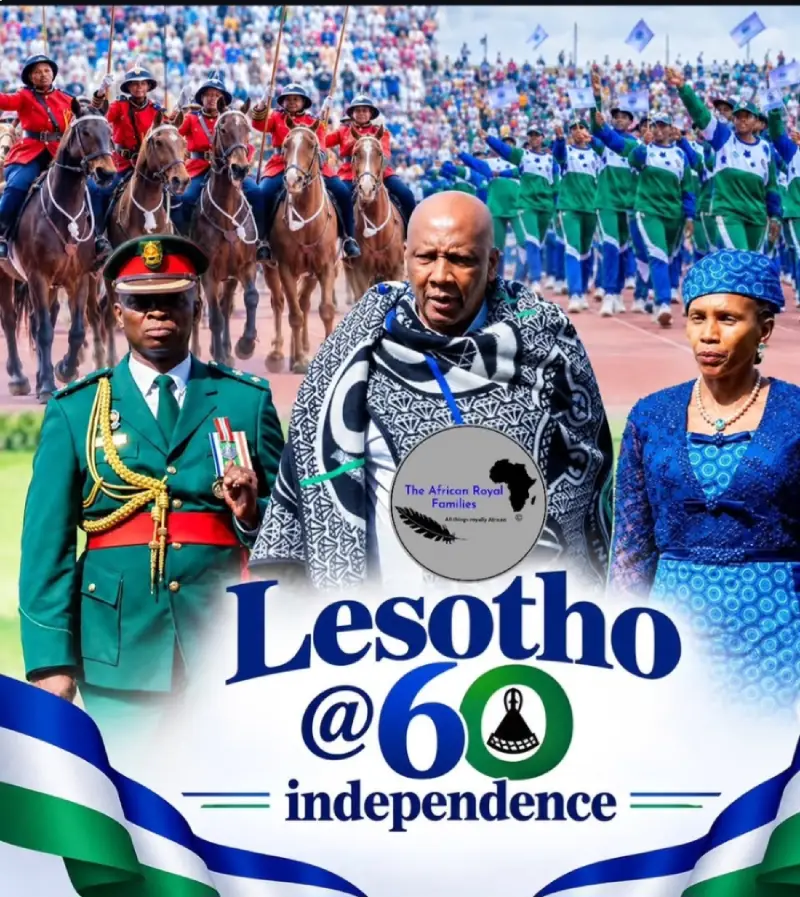
Lesotho Independence Day celebrations mark the country's independence on 4 October, bringing together national history, Basotho identity and cultural pride.
Some dates tell you when something happened.
Others help explain who a country is.
For Lesotho, 4 October is one of those dates.
Every year, the Kingdom of Lesotho commemorates its independence on 4 October. It was on this date in 1966 that the former British territory of Basutoland became the independent Kingdom of Lesotho.
For Basotho, Independence Day is connected to national identity, sovereignty, unity, culture, history and nationhood.
For visitors, the occasion provides something equally valuable:
Context.
You may come to Lesotho for mountains, waterfalls, pony trekking, hiking, food or road trips.
But Independence Day gives you an opportunity to understand the country behind the scenery.
If you are visiting Maseru around 4 October, this guide will help you understand what Independence Day means, how Lesotho became independent, what visitors may experience, where to explore the country's history, how to plan around the public holiday and how to experience the occasion respectfully.
When Is Lesotho Independence Day?
Lesotho Independence Day is celebrated annually on 4 October.
It commemorates the country's independence from Britain on 4 October 1966.
Before independence, the territory was known as Basutoland.
At independence, it became the Kingdom of Lesotho.
The date remains one of Lesotho's standing national commemorations.
Why 2026 Is Particularly Important
In 2026, Lesotho marks 60 years of independence.
That makes this year's Independence Day especially significant.
Lesotho marked its 60th Independence Diamond Jubilee on 4 October 2026. Visitors planning a future Independence Day trip should confirm the programme announced for their travel year.
For travellers considering an Independence Day visit, 2026 is therefore not simply another annual celebration.
It is a major national milestone.
However, visitors should still confirm the latest official information about specific ceremonies, venues, times, road arrangements and public access.
Celebrate the history. Verify the programme.
What Is Lesotho Independence Day?
Independence Day commemorates Lesotho becoming a sovereign state after the period when the territory was known as Basutoland.
But understanding the celebration requires looking further back.
Lesotho's national story did not begin in 1966.
Its foundations reach much deeper into the nineteenth century and the formation of the Basotho nation under King Moshoeshoe I.
That distinction matters.
Basotho nationhood predates modern independence.
Independence Day therefore celebrates a modern political milestone within a much longer national story.
From Basutoland to Lesotho
Before independence, Lesotho was known internationally as Basutoland.
Following a long period under British rule, the country reached independence on 4 October 1966.
Basutoland became Lesotho.
At independence, King Moshoeshoe II was monarch and Chief Leabua Jonathan became the country's first Prime Minister.
A new period in Lesotho's political history had begun.
But the Story Starts Before 1966
To understand Independence Day properly, you need to know about King Moshoeshoe I.
During a period of major upheaval in Southern Africa in the nineteenth century, Moshoeshoe brought communities together and helped establish the political foundations of the Basotho nation.
His leadership became associated with unity, diplomacy, strategic thinking, protection, negotiation and nation-building.
That is why Moshoeshoe's Day and Independence Day are historically connected—but should not be treated as the same celebration.
Moshoeshoe's Day vs Independence Day
Moshoeshoe's Day — 11 March
Moshoeshoe's Day focuses on King Moshoeshoe I, his leadership, his legacy and the formation of the Basotho nation.
Independence Day — 4 October
Independence Day focuses on Lesotho becoming independent in 1966.
The two commemorations connect through the broader story of Lesotho, but they mark different historical events.
The Road to Independence
A simple way to understand the story is through this sequence:
Early 19th century — King Moshoeshoe I helps build the foundations of the Basotho nation.
19th century — The Basotho nation faces major regional pressures and changing political relationships.
Basutoland — The territory comes under British rule.
4 October 1966 — Basutoland becomes the independent Kingdom of Lesotho.
2026 — Lesotho marks 60 years of independence.
From nationhood to sovereignty.
Why Independence Day Matters
For visitors, 4 October may look like flags, ceremonies, traditional clothing, music or simply a public holiday.
For Basotho, the meaning runs deeper.
The anniversary provides an opportunity to reflect on the country's history, national identity, achievements, challenges and future.
That is particularly relevant during the 60th anniversary in 2026, when national reflection forms an important part of the Diamond Jubilee.
A visitor should therefore approach Independence Day not simply as entertainment.
It is a national commemoration.
What Do Lesotho Independence Day Celebrations Include?
There is no single programme that repeats identically every year.
Celebrations and commemorations may include:
- Official national ceremonies
- Speeches
- Royal participation
- Government activities
- Community initiatives
- Cultural performances
- Music
- Traditional clothing
- Public gatherings
- District activities
- Heritage programmes
- Community-service initiatives
- Food
- Reflection on Lesotho's history
The exact format can change from year to year.
That is why visitors should always check the current official programme.
Don't Assume the Main Celebration Is Always in Maseru
Because Maseru is the capital, visitors may naturally assume the country's main Independence Day event will always take place in Maseru CBD.
Do not make that assumption.
Official activities can take place in different locations depending on the year's programme, while district-level activities may also occur elsewhere in the country.
The practical rule is simple:
Check the current programme before travelling to an event.
Thaba Bosiu and the National Story
Thaba Bosiu is not simply a tourist attraction.
It is one of the most important places in the story of the Basotho nation.
The mountain became the stronghold of King Moshoeshoe I and remains closely connected with Basotho history, national memory, heritage and identity.
For a visitor interested in Independence Day, understanding Thaba Bosiu can transform the holiday from simply watching a celebration into understanding the history behind it.
Why Thaba Bosiu Matters on Independence Day
Independence in 1966 makes more sense when you understand the nation that existed before it.
The historical sequence becomes clearer:
Moshoeshoe I → Basotho nationhood → colonial history → Basutoland → independence → modern Lesotho
That is a much richer travel experience than simply taking a photograph and leaving.
If Thaba Bosiu forms part of your itinerary, check current visitor and access arrangements before travelling.
What Visitors May Experience Around Independence Day
Every year is different.
But several symbols, traditions and activities may appear around national celebrations.
The Lesotho Flag
Expect the national flag to feature prominently during Independence celebrations.
If you are photographing the occasion, try to capture the flag together with people, place and activity.
That tells a stronger story than a flag by itself.
Basotho Blankets
Few cultural symbols are as visually connected with Lesotho as the Basotho blanket.
During national and cultural occasions, visitors may see blankets worn proudly.
They are more than cold-weather accessories.
Basotho blankets can carry associations with identity, social occasions, history, status, ceremony and cultural belonging.
The Mokorotlo
The distinctive Basotho hat is another widely recognised national symbol.
Its form is associated with Qiloane, and the mokorotlo appears in cultural imagery, crafts, tourism and national symbolism.
For visitors, learning what Lesotho's symbols mean makes seeing them much more interesting.
Traditional Music and Dance
Depending on the programme, visitors may encounter traditional singing, dance, choirs, contemporary music, cultural performances or community entertainment.
Do not assume every Independence Day has the same performers or activities.
Check the current programme.
Speeches and National Reflection
National commemorations may include reflection on unity, development, history, leadership, citizenship, national challenges and the country's future.
For international visitors, these moments can provide useful insight into how Basotho themselves reflect on their country.
Community Activities
National celebration does not necessarily mean only concerts, parades and large ceremonies.
Past Independence Day programmes have also included community and environmental activities.
That is a useful reminder that national pride can be expressed through service as well as ceremony.
Food
Where public celebrations, family gatherings or food vendors form part of your experience, look for opportunities to try local flavours.
Depending on where you go, you may encounter foods such as:
- Papa
- Moroho
- Meat dishes
- Homemade breads
- Other Basotho food experiences
Independence Day does not have one official festival menu.
Food availability depends on where you are and what events you attend.
Experiencing Independence Day From Maseru
Maseru can make a practical base for Independence Day visitors because it provides accommodation, restaurants, shopping, transport connections and services while offering access to important heritage destinations.
But remember:
Maseru can be your base without being the location of every official event.
Confirm where current activities are taking place before building your itinerary.
Maseru City Centre
Depending on the year's programme, the capital may have public activities, holiday traffic, business closures, restaurants, shopping, community gatherings or event-related movement.
Check current information before deciding where to go and when.
Thaba Bosiu
For historical and cultural depth, Thaba Bosiu should be high on the list.
Even if there is no official Independence Day programme there during your specific visit, it remains important for understanding the origins and development of the Basotho nation.
Morija
Morija provides another layer of Lesotho's historical story.
The area has strong associations with education, mission history, publishing, archives, heritage and cultural preservation.
A visit to Morija Museum & Archives, subject to current opening arrangements, can complement the national story you encounter around Independence Day.
Local Markets
Markets and craft centres can help visitors explore Basotho blankets, mokorotlo hats, handmade items, crafts, souvenirs and everyday commerce.
However, Independence Day is a public holiday.
Check opening hours before travelling.
Remember: Independence Day Is a Public Holiday
This deserves special attention because it can directly affect a visitor's plans.
Independence Day is a public holiday in Lesotho.
That can affect:
- Business hours
- Government offices
- Banks
- Transport patterns
- Shopping
- Attractions
- Restaurants
- Other services
Do not plan your entire day assuming everything will operate normally.
Confirm anything important in advance.
Business Travellers: Plan Ahead
If your work trip overlaps 4 October, check your schedule carefully.
Your meeting, government appointment, supplier, banking requirement, office visit or administrative task may be affected by the holiday.
Confirm important arrangements before the holiday, rather than discovering a closure on the morning of 4 October.
Lion Guard Business Travel Tip
If your business trip overlaps Independence Day, use the previous working day to confirm meetings, transport, office opening arrangements, documents, payments, suppliers and government appointments.
Then use the holiday, where your schedule permits, to experience more of Lesotho.
A 4-Day Independence Day Visit From Maseru
Rather than trying to see everything, build a simple itinerary around confirmed information.
Day 1 — Arrive and Understand Maseru
Check into your accommodation.
Settle in.
Confirm the current Independence Day programme.
Explore Maseru.
Have dinner and prepare for the following day.
Day 2 — 4 October: Independence Day
Follow the current official programme.
Depending on what has been announced, you might attend an appropriate public activity, observe celebrations, experience cultural performances or visit an accessible heritage destination.
Enjoy local food where available.
Take photographs respectfully.
Talk to people.
And listen.
Day 3 — Understand the History
Consider visiting Thaba Bosiu.
Learn about King Moshoeshoe I, Basotho nationhood and the historical foundations that eventually lead into the story of modern Lesotho.
Check current visitor arrangements before setting out.
Day 4 — Morija
If your itinerary allows, consider visiting Morija and Morija Museum & Archives.
Check current opening arrangements, particularly when travelling around a public-holiday period.
Then continue your journey or return to Maseru.
For International Visitors
Independence Day can provide an excellent introduction to Basotho identity.
But remember that you are visiting someone else's national commemoration.
Approach it with curiosity, respect and a willingness to learn.
The goal is not to arrive expecting people to perform culture for tourists.
The better approach is to observe, ask thoughtful questions and understand what the occasion means to the people celebrating it.
Learn a Little Sesotho
Even a few words can make interactions warmer.
Lumela — Hello.
Khotso — Peace.
Kea leboha — Thank you.
Do not worry about sounding perfect.
Respectful effort matters.
Photography Etiquette
Independence Day can be visually beautiful.
You may encounter blankets, flags, traditional clothing, performances, families, children, dignitaries and ceremonies.
But a celebration is not automatic consent to photograph everyone however you want.
Ask before taking close personal photographs where appropriate.
Follow restrictions at official events.
Never interfere with ceremonies, security, performers or officials for the sake of a photograph.
Photograph the Story, Not Only the Colours
Strong travel photography can connect symbols with people and place.
Look for combinations such as:
- Flag + person — national pride
- Blanket + movement — cultural identity
- Different generations together — continuity
- Landscape + celebration — place
- Thaba Bosiu + people — history
- Food + community — connection
A good travel photograph should help answer:
What was it like to be there?
What Should Visitors Wear?
International visitors do not need to dress as Basotho simply to participate in or observe Independence Day.
Wear comfortable, weather-appropriate and respectful clothing.
If you own or purchase authentic Basotho clothing and understand how it is appropriately worn, that is different.
Cultural appreciation should begin with respect—not costume.
October Weather
October falls during Lesotho's spring.
Conditions can vary according to elevation, time of day and changing weather.
For a full day out, consider bringing:
- Light layers
- A warmer layer
- Sun protection
- Comfortable walking shoes
- Weather protection
- Water
Check the current forecast shortly before travelling.
What to Pack for Independence Day
A practical day bag might include:
- Phone
- Power bank
- Camera
- Water
- Sunscreen
- Hat
- Light warm layer
- Weather protection
- Personal medication
- Identification
- Spending money
- Current event information
Keep the bag light enough that carrying it all day does not become the event you remember most.
Independence Day With Children
Independence Day can create meaningful opportunities for children to learn about history, flags, national identity, music, traditional clothing, community and heritage.
Instead of simply telling children:
“We're going to a ceremony.”
Give them questions to explore:
- Who was Moshoeshoe I?
- Why is 4 October important?
- What colours are on Lesotho's flag?
- What is a Basotho blanket?
- What does the mokorotlo represent?
The holiday becomes an adventure with a purpose.
Always check whether a specific public event is suitable and accessible for your children.
Independence Day for Couples
For couples, an Independence Day visit can combine culture, history, food, photography, scenic driving and relaxed evenings in Maseru.
A simple experience might combine a public celebration or cultural activity with Thaba Bosiu, dinner and comfortable accommodation.
It creates a very different couple's getaway from an ordinary restaurant-and-hotel weekend.
Independence Day for History Lovers
If history is the reason for your trip, look beyond 4 October itself.
Build the sequence:
King Moshoeshoe I → Thaba Bosiu → Basotho nation → British rule → Basutoland → independence in 1966 → modern Kingdom of Lesotho
That gives the holiday proper historical context.
Independence Day for Culture Enthusiasts
Use Independence Day as a starting point for learning about:
- Basotho blankets
- Sesotho
- Local food
- Music
- Morija
- Thaba Bosiu
- Traditional communities
- Markets
- Basotho hospitality
The celebration becomes more meaningful when connected to the wider culture and history of the country.
South African Weekend Visitors
Because Lesotho is completely surrounded by South Africa, Independence Day may appeal to South African travellers looking for a culturally meaningful cross-border weekend.
But you are still crossing an international border.
Before travelling, check the current requirements relevant to your trip, including passport and entry requirements, vehicle documents, rental-car permission where applicable and current border operating information.
Do not rely on what happened during a previous trip.
Lion Guard Travel Tip — Don't Ask Only “What's Happening?”
Ask: “What does it mean?”
A performance becomes more interesting when you understand the tradition.
A blanket becomes more interesting when you understand the symbolism.
Thaba Bosiu becomes more interesting when you understand Moshoeshoe.
Independence Day becomes more meaningful when you understand how Lesotho became Lesotho.
Using Lion Guard as Your Maseru Base
Lion Guard Guest House is located in Ha-Matala, Maseru, approximately 7 km from Maseru CBD.
For visitors using Maseru as their Independence Day base, practical amenities include:
- Private bathrooms
- Reliable hot water
- Free Wi-Fi
- In-room fridge
- Table and chair
- Secure enclosed parking
- Heater during colder weather
- Electric blanket
- Daily housekeeping
That can make Lion Guard a practical base for international visitors, couples, families, business travellers and cultural travellers whose itinerary genuinely centres on Maseru and surrounding attractions.
After the Celebration
National events can mean walking, driving, crowds, photography, sun, changing weather and long days.
Then you return.
Park.
Shower.
Connect to Wi-Fi.
Put tomorrow's drinks in the fridge.
Rest.
That is where accommodation stops being only a bed and becomes part of the trip.
Respectful Visitor Checklist
When attending Independence Day activities:
- Check the current programme
- Follow official instructions
- Dress appropriately
- Ask before close-up photographs where appropriate
- Keep children supervised
- Respect ceremonies
- Learn a few basic Sesotho greetings
- Support local businesses
- Dispose of litter properly
- Avoid disrupting performances
- Respect security restrictions
- Remember that this is a national commemoration
Join with respect.
Public-Holiday Planning Checklist
Before 4 October:
- Confirm accommodation
- Check the current event programme
- Plan transport
- Check fuel
- Confirm restaurant opening where necessary
- Confirm attraction opening
- Complete important banking beforehand
- Complete important government business beforehand
- Check current border information if relevant
- Check the weather
- Prepare your day bag
- Charge your phone
- Charge your power bank
Visiting Lesotho for the 60th Anniversary in 2026?
The 2026 Independence Day is especially significant because Lesotho marks 60 years since independence.
If you are travelling specifically for the Diamond Jubilee, a few principles are especially useful.
Plan Early
A major national anniversary can create additional visitor activity and demand.
Verify Events
Do not build your 2026 itinerary from a previous year's Independence Day programme.
Use current official information.
Expect Changes
Security arrangements, traffic, venues and public access may differ from an ordinary weekend.
Add Historical Context
If your itinerary permits, include places such as Thaba Bosiu and Morija rather than treating the trip as only a one-day celebration.
Stay Flexible
National programmes can evolve.
Build your trip around confirmed information.
Common Independence Day Visitor Mistakes
Assuming Every Celebration Happens in Maseru CBD
Check the current programme.
Confusing Independence Day With Moshoeshoe's Day
They commemorate different historical events and take place on different dates.
Assuming the Basotho Nation Began in 1966
It did not. Basotho nationhood has a much longer history.
Treating the Holiday Only as Entertainment
Remember its national significance.
Assuming Every Shop Is Open
It is a public holiday.
Scheduling Important Government Business on 4 October
Plan around the holiday.
Using Last Year's Event Programme
Verify the current year.
Photographing Everyone Without Consideration
Ask where appropriate.
Treating Basotho Clothing Like a Tourist Costume
Understand and respect the culture first.
Spending the Entire Visit in Shopping Centres
If the reason for your visit is Independence Day, make time to explore the country's history and heritage.
Ignoring Thaba Bosiu
For visitors who want historical context, it is an important place to understand.
Leaving Without Learning Why 4 October Matters
That misses the point of an Independence Day trip.
Frequently Asked Questions
When Is Lesotho Independence Day?
Lesotho Independence Day is celebrated every year on 4 October.
When Did Lesotho Become Independent?
Lesotho became independent from Britain on 4 October 1966.
What Was Lesotho Called Before Independence?
The territory was known as Basutoland. At independence it became the Kingdom of Lesotho.
Is Independence Day a Public Holiday in Lesotho?
Yes. Visitors should plan for possible changes to business hours, government services, banks, attractions and other services.
How Old Is Independent Lesotho in 2026?
Lesotho marks 60 years of independence in 2026.
What Is Lesotho's 60th Independence Anniversary Called?
The Government of Lesotho is commemorating the milestone as the country's 60th Independence Diamond Jubilee.
How Does Lesotho Celebrate Independence Day?
The programme varies by year and may include official ceremonies, speeches, cultural performances, community activities, traditional clothing, music, heritage activities and national reflection.
Always check current official announcements.
Where Is the Main Independence Day Celebration Held?
Do not assume the same venue hosts the main celebration every year.
Check current Government of Lesotho announcements before travelling.
Is Maseru a Good Place to Stay During Independence Day?
Maseru can be a practical base because it offers accommodation, restaurants, shops, transport connections and access to important cultural destinations.
However, confirm where the activities you intend to attend are actually taking place.
What Historical Site Should I Visit Around Independence Day?
Thaba Bosiu is one of the most important places for understanding King Moshoeshoe I and the development of the Basotho nation.
Check current visitor arrangements before travelling.
Is Independence Day Suitable for Families?
It can be, particularly when parents use the occasion to help children learn about Lesotho's history, culture, national symbols and heritage.
Suitability for individual public events should be checked against the current programme.
Can International Tourists Attend Independence Day Events?
Where activities are open to the public, international visitors may be able to attend.
Follow current official access, security, photography and visitor guidance.
What Should I Wear?
Wear comfortable, respectful clothing suitable for spring weather, walking and the activities you plan to attend.
What If I Cannot Find a Major Public Event?
You can still build a meaningful cultural day around places such as Thaba Bosiu and Morija, together with Basotho food, markets, history and Maseru.
Understanding Independence Day does not depend on attending a stadium-sized event.
Are Restaurants and Shops Open on Independence Day?
Some may be open while others may close, reduce hours or operate differently.
Confirm directly when a particular business is important to your plans.
What Is the Difference Between Moshoeshoe's Day and Independence Day?
Moshoeshoe's Day on 11 March commemorates King Moshoeshoe I and his legacy as founder of the Basotho nation.
Independence Day on 4 October commemorates Lesotho becoming independent in 1966.
Where Should I Stay for Lesotho Independence Day?
Choose accommodation based on your itinerary, transport, confirmed event locations, parking requirements, comfort and access to the places you intend to visit.
Lion Guard Guest House can provide a practical Maseru base when your itinerary centres on the capital and nearby cultural attractions.
Experience the Story Behind the Flag
A flag can tell you which country you are in.
History tells you why that country exists.
On 4 October, Lesotho celebrates independence.
But the story reaches far beyond 1966.
It reaches back to Moshoeshoe.
To Thaba Bosiu.
To the formation of the Basotho nation.
To Basutoland.
To generations who protected language, identity, tradition and community.
Then to independence.
And finally to the Lesotho visitors experience today.
That is why Independence Day should not be reduced to:
“What events are on?”
The better travel question is:
“What can this day teach me about Lesotho?”
Ask that question and the blanket means more.
The mountain means more.
The flag means more.
The celebration means more.
And the country means more.
The mountains may bring you to Lesotho. The story behind the Kingdom is what helps you understand it.