
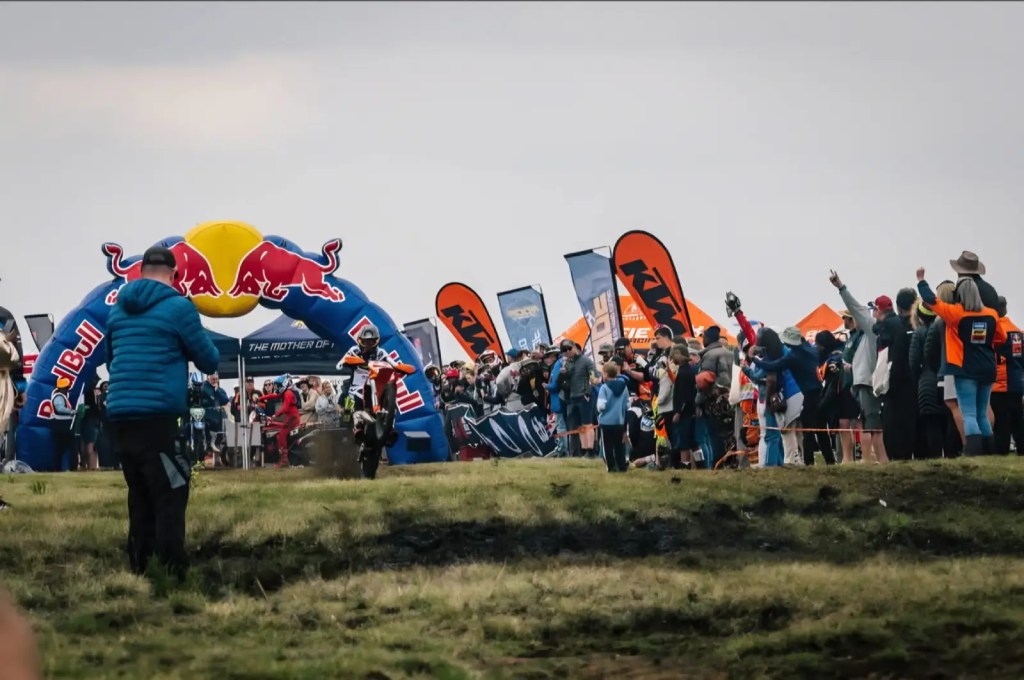
Roof of Africa Lesotho brings motorcycles, mountains and endurance together in a demanding hard-enduro event in the Kingdom in the Sky.
There are motorcycle races.
And then there is the Roof.
For decades, riders have travelled to Lesotho to test themselves against rock, altitude, steep climbs, technical trails, mountain weather, fatigue and terrain that seems determined to stop them.
The event is the Roof of Africa, one of Lesotho's best-known international sporting events and one of hard enduro's legendary challenges.
This is not a race where the landscape quietly sits in the background.
The landscape is part of the competition.
Lesotho's mountains influence where riders can go, how quickly they can move, how much energy they use and whether they reach the finish.
For spectators, the Roof offers something different too: an opportunity to experience extreme motorcycle racing inside the mountain environment that helped create the event's reputation.
If your idea of travel includes motorcycles, mountains, technical riding, photography, road trips and watching talented riders ask machines to do unreasonable things, the Roof deserves your attention.
What Is the Roof of Africa?
The Roof of Africa is a hard-enduro motorcycle event held in Lesotho.
Its history dates back to 1967, although the early event was different from the specialised motorcycle competition recognised today.
The modern Roof sends riders into demanding off-road terrain that can include:
- Rocky trails
- Steep climbs
- Technical descents
- Valleys
- High-altitude terrain
- Changing mountain conditions
- Navigation challenges
- Long periods of physical effort
This is serious motorsport.
Visitors do not need to compete to experience it.
Depending on the current year's programme, spectators may be able to experience race-related activities, designated viewing opportunities and other public event elements while combining the Roof with a wider Lesotho trip.
Always use the current organiser's information when planning.
Routes, spectator locations, schedules, access arrangements and road restrictions can change from one edition to another.
The Roof of Africa in 2026
The Roof remains part of the FIM Hard Enduro World Championship in 2026, following its high-profile role in the championship in 2025.
For visitors, however, the most important planning rule remains simple:
Use the current 2026 event programme—not an old route map, spectator post or previous year's itinerary.
Competition routes, access points, public activities and spectator arrangements are event-specific.
Treat current official instructions as the final authority for race-week planning.
Why Is It Called the Roof of Africa?
The name makes sense when you understand Lesotho.
Lesotho is remarkable for its elevation: the entire country lies more than 1,000 metres above sea level, while large parts of the country rise considerably higher.
The Maloti Mountains help create the dramatic highland landscape behind Lesotho's famous Kingdom in the Sky identity.
The Roof takes motorcycle competition into this elevated environment.
Riders can encounter terrain at very high elevations, where altitude becomes another factor alongside rock, gradient, weather and fatigue.
So Roof of Africa is more than a memorable event name.
It fits the country.
The History of the Roof of Africa
A Lesotho Motorsport Story Dating to 1967
The Roof traces its history to 1967.
Its earliest form was different from the modern hard-enduro event.
The original competition involved off-road vehicles tackling difficult Lesotho terrain, with motorcycles becoming part of the event during its early development.
Over time, motorcycles moved to the centre of the Roof's identity.
The event evolved into the specialised hard-enduro competition recognised today.
That long history matters.
New motorsport events appear every year.
The Roof has something that cannot simply be manufactured:
Generations of competition in Lesotho's mountains.
Motorcycles changed.
Technology changed.
Safety systems changed.
Routes and formats changed.
But the mountains remained difficult.
The Mother of Hard Enduro
The Roof is widely promoted as “The Mother of Hard Enduro.”
The nickname reflects the event's long history and reputation for demanding terrain.
It is not built around a smooth purpose-made racing circuit.
Its identity comes from the relationship between rider, motorcycle and natural terrain.
When experienced international riders arrive in Lesotho, they are entering an event with decades of history behind it.
What Is Hard Enduro?
If you are new to motorcycle sport, it helps to understand what you are watching.
Hard enduro takes riders through extremely demanding off-road terrain.
Competitors may face:
- Rocks
- Steep ascents
- Difficult descents
- Loose surfaces
- River sections
- Narrow mountain routes
- Technical obstacles
- High altitude
- Navigation
- Fatigue
- Changing weather
The motorcycle matters.
But the rider matters enormously.
Strength, endurance, balance, technique, concentration and decision-making all become part of the challenge.
This Is Not Motocross
Motocross generally takes place on a purpose-built circuit.
Hard enduro uses natural terrain to create the challenge.
At the Roof, the mountain itself can provide the obstacles.
A rock does not care how famous a rider is.
A steep climb does not care how many races someone has won.
And gravity remains completely unimpressed by sponsorship.
That unpredictability is part of the appeal.
How Difficult Is the Roof of Africa?
Very.
That is the short answer.
The better answer is:
Difficulty is part of the event's identity.
Riders may encounter combinations of steep terrain, rocks, altitude, fatigue, navigation and changing conditions.
A section that looks difficult from a spectator's position can be even more demanding from the motorcycle.
Elite riders make extraordinary riding look almost normal.
It isn't.
Competition Classes
The Roof has used different competition classes to group riders according to the event's current competition structure.
Recent editions have included classes such as:
Gold
The elite end of the competition, designed for highly capable riders facing the event's most demanding challenge.
Silver
Still a serious hard-enduro category requiring considerable riding ability and preparation.
Bronze
A different competition level, but not something that should automatically be interpreted as easy.
Iron
An additional category used in recent editions.
Class structures, qualification rules, licensing requirements and technical regulations can change.
Anyone considering entering the event should read the current official competition regulations rather than relying on an older article.
Can Anyone Enter the Roof of Africa?
No.
The Roof should not be treated like a motorcycle tourism activity you casually book after breakfast.
Competitors may need appropriate:
- Licensing
- Registration
- Motorcycle preparation
- Technical compliance
- Competition experience
- Fitness
- Class qualification
- Safety equipment
If you want to race, use the current official regulations.
This guide is primarily for visitors and spectators, not a substitute for competition rules.
Why Fitness Matters
Hard enduro requires much more physical effort than someone unfamiliar with the sport may realise.
Riders use:
- Legs
- Arms
- Core strength
- Balance
- Body positioning
- Momentum
- Coordination
- Concentration
They must continue making technical decisions while becoming increasingly tired.
Altitude can add another challenge.
Watch a skilled hard-enduro rider for a few minutes and it becomes obvious:
The motorcycle is not doing all the work.
Why Lesotho Makes the Roof Special
Move the Roof onto a flat prepared circuit and something fundamental disappears.
Lesotho provides the:
- Altitude
- Mountains
- Rock
- Weather
- Valleys
- Rural landscapes
- Technical terrain
that shaped the event's identity.
The Roof and its destination are difficult to separate.
That is what makes it particularly interesting for travellers.
You are not merely travelling to watch motorcycles.
You are travelling to watch motorcycles attempt to conquer Lesotho.
The Maloti Mountains
The Maloti Mountains provide some of Lesotho's most dramatic scenery.
For ordinary travellers, they can be beautiful.
For Roof riders, they can be beautiful problems.
A steep rocky landscape that makes a photographer stop and stare may make a competitor think something we probably should not publish on the Lion Guard blog.
That contrast is part of the event.
The Landscape Beyond the Motorcycles
Depending on the current route and where visitors are officially permitted to go, a Roof trip can expose spectators to landscapes including:
- Mountain ridges
- Valleys
- Rural settlements
- Open grasslands
- Rock formations
- Highland roads
- Wide mountain views
Bring a camera.
But remember:
No photograph is worth standing somewhere dangerous.
The Roof Takes Place in a Living Country
The Roof does not happen inside a sealed motorsport complex.
It takes place within Lesotho.
That means visitors may encounter communities living their ordinary lives around the broader event environment.
Respect:
- Homes
- Private land
- Livestock
- Roads
- Children
- Residents
- Local instructions
Do not treat a village as a race-themed tourist display.
People live there.
The Basotho Pony and the Motorcycle
There is an interesting contrast in Lesotho's mountains.
In the same country, you may encounter a modern hard-enduro motorcycle and a Basotho horseman.
One represents modern extreme motorsport.
The other reflects generations of movement through Lesotho's mountainous landscape.
Both make sense here.
It is one of the visual reminders that the Roof is more than a motorcycle event dropped into an arbitrary location.
Its setting matters.
The Roof and International Motorsport
The Roof has attracted riders from Southern Africa and around the world.
Its reputation extends far beyond Lesotho.
That international reach gives visitors an interesting combination:
World-class motorcycle competition inside a country where local terrain knowledge remains enormously valuable.
The fastest rider still has to deal with the mountain in front of them.
Why 2025 Was Important
The 2025 Roof of Africa was particularly significant because it formed the final round of the FIM Hard Enduro World Championship.
That brought international championship attention directly to Lesotho and placed the Roof in front of a wider global hard-enduro audience.
The significance continued into 2026, with the Roof remaining part of the FIM Hard Enduro World Championship calendar.
For Lesotho tourism, that visibility matters.
A viewer somewhere else in the world may first discover Lesotho because they see a motorcycle climbing a mountain and ask:
“Where is that?”
The answer is Lesotho.
Watching Roof of Africa Lesotho | Advice for Spectators
Yes.
You do not need to race to appreciate the Roof.
But watching a hard-enduro event is very different from sitting in a stadium.
The competition can move through remote and technically difficult terrain.
Spectators therefore need to follow the current official spectator guidance.
Do not assume you can simply drive toward the sound of motorcycles and find a safe place to stand.
Spectator Rule #1: Don't Invent Your Own Viewing Point
Use official information.
Routes can change.
Access can change.
Road closures can change.
Safety restrictions can change.
A location that worked in a previous edition may not be appropriate this year.
Spectator Rule #2: Stay Off the Racing Line
Never stand:
- On the racing line
- In dangerous corners
- At the bottom of technical climbs
- In restricted areas
- Anywhere officials tell you not to stand
You came to watch the obstacle course.
You do not need to become part of it.
Spectator Rule #3: Leave Course Markings Alone
Never move:
- Route markers
- Signs
- Barriers
- Course tape
- Direction indicators
Competitors and organisers depend on them.
Spectator Rule #4: Follow Officials
Listen to:
- Marshals
- Race officials
- Security personnel
- Organisers
They have current information about where competitors are expected and where spectators may safely stand.
You do not.
Maseru and the Roof
The Roof has historically maintained an important connection with Maseru.
Recent editions have included activities in or around the capital before competitors move into the mountain sections of the event.
This can make Maseru useful as an:
- Arrival base
- Preparation point
- Supply stop
- Accommodation base for suitable programme elements
- Restaurant base
- Recovery stop
- Departure base
But there is an important warning:
Do not assume every race stage happens near Maseru.
The mountain stages depend on the current year's route.
Check the Programme Before Choosing Accommodation
This is one of the most important Roof travel tips.
Before booking accommodation specifically for the event, check the current:
- Race headquarters
- Start areas
- Finish areas
- Public activities
- Spectator areas
- Road restrictions
- Event schedule
- Your own role in the event
A spectator has different needs from a competitor.
A competitor has different needs from a mechanic.
A photographer may have different priorities from a support crew.
Choose accommodation around what you actually need to do.
Lion Guard as a Maseru Base
Lion Guard Guest House is in Ha-Matala, Maseru, approximately 7 km from Maseru CBD.
That can make it a practical option for visitors whose Roof itinerary genuinely includes the capital.
Guests have access to:
- Private bathroom
- Reliable hot water
- Free Wi-Fi
- In-room fridge
- Table and chair
- Secure enclosed parking
- Daily housekeeping
- Heater during colder weather
- Electric blanket
After dust, cold, early starts, long days and mountain travel, simple comforts can become very important.
For Spectators
If the current event programme makes Maseru practical for your plans, Lion Guard can provide a comfortable base before or after your event day.
Return.
Shower.
Charge your phone.
Back up your photographs.
Sleep.
Then start again.
For Support Crews
Support teams may value practical amenities such as:
- Wi-Fi
- Parking
- Hot water
- In-room fridge
- Workspace
- Access to Maseru services
But do not choose accommodation simply because it is in Maseru.
Confirm that the location works for your specific current race logistics.
For International Visitors
Maseru can be useful at the beginning or end of a longer Roof trip.
Arrive.
Recover from your journey.
Organise supplies.
Confirm your plans.
Then move deeper into Lesotho if the event programme requires it.
Lion Guard Travel Tip — Route First. Room Second.
Build your accommodation around the current race programme—not simply the Roof of Africa name.
Check the schedule, decide what you want to see, understand where you need to be and then choose accommodation that fits.
Route first. Room second.
What Should Spectators Pack?
A Roof spectator day can be very different from spending a day around Maseru.
Prepare for terrain, weather, waiting, photography and changing conditions.
Clothing
Consider bringing:
- Warm layer
- Weather-resistant jacket
- Comfortable walking shoes
- Hat
- Extra socks
- Clothing suitable for outdoor conditions
Day Bag
Useful items can include:
- Water
- Snacks
- Sunscreen
- Sunglasses
- Phone
- Power bank
- Personal medication
- Small first-aid essentials
- Current event information
Photography Equipment
Depending on your plans:
- Camera
- Charged batteries
- Memory cards
- Lens cloth
- Weather protection
- Power bank
And remember:
Do not step into the course for the perfect photograph.
Prepare for Mountain Weather
Conditions in Lesotho's mountains can differ significantly from conditions in Maseru.
Prepare for combinations of:
- Cold
- Wind
- Sun
- Rain
- Sudden weather changes
Check the forecast for the actual area you are visiting, not simply Maseru.
Don't Underestimate the Sun
Cool mountain air does not mean weak sunlight.
If you will be outside for hours, use sensible sun protection such as:
- Sunscreen
- Hat
- Sunglasses
- Appropriate clothing
Rain Can Change Your Plans
Rain can affect:
- Dirt
- Rock
- Soil
- River sections
- Access roads
- Spectator movement
For competitors, rain can transform the race.
For spectators, it can transform the travel plan.
Flexibility is part of mountain-event travel.
Driving During Roof Week
Expect conditions that may include:
- Event traffic
- Motorcycles
- Support vehicles
- Road restrictions
- Livestock
- Pedestrians
- Visitors unfamiliar with local roads
- Changing weather
Don't Chase the Race
Do not try to race from viewpoint to viewpoint.
Do not speed along public roads trying to beat competitors to another location.
Do not chase motorcycles through unfamiliar mountain areas.
You are a spectator.
Not another competition class.
Drive in Daylight Where Practical
Unfamiliar mountain roads are generally easier to understand in daylight.
This becomes especially important when:
- Weather changes
- Animals are present
- Visibility is reduced
- The route is unfamiliar
Plan conservatively.
Prepare Your Vehicle
Before heading into mountain areas, check practical basics such as:
- Fuel
- Tyres
- Spare wheel
- Brakes
- Lights
- Wipers
- Phone charging
- Route information
Roof competitors have support crews and mechanics.
Your road-trip vehicle may only have you.
Prepare it properly.
Rental Vehicles
If you are renting a vehicle, understand:
- Where it may travel
- Road restrictions
- Insurance conditions
- Breakdown procedures
- Cross-border requirements if applicable
Do not take an ordinary rental vehicle onto an off-road race route.
That is not what “unlimited kilometres” means.
South African Visitors
For South African motorsport fans, the Roof can make an excellent international road trip.
But you are still crossing an international border.
Before travelling, check the current requirements that apply to your trip, including:
- Passport and entry requirements
- Vehicle documents
- Rental authorisation if applicable
- Current border operating information
- Insurance requirements
- Route
- Accommodation
- Event access arrangements
Do not rely on what worked several years ago.
International Visitors
Build buffer time into your itinerary.
Avoid planning:
Flight → border → race stage
with no margin between them.
Travel delays happen.
Border crossings take time.
Mountain roads take time.
Use Maseru to rest and organise before continuing according to the event programme.
Respect Private Land
A race route may cross environments that are not ordinary public tourist spaces.
Never assume:
“The race goes there, so I can drive there.”
Competitor access and spectator access are not necessarily the same.
Follow current official guidance.
Respect Livestock
Lesotho's rural roads and landscapes may include:
- Cattle
- Sheep
- Goats
- Horses
- Donkeys
Slow down.
Give animals space.
Do not rev aggressively around them, chase them or turn somebody's livestock into your action video.
Respect Local Communities
Ask before taking close photographs of people where appropriate.
Do not enter homes or private property without permission.
Do not treat residents as background props for your motorsport photographs.
The Roof takes place in their country.
So does your visit.
Support Local Businesses
Large sporting events can create opportunities for:
- Food sellers
- Craft vendors
- Transport providers
- Accommodation businesses
- Restaurants
- Shops
- Tourism operators
Where practical, spend locally.
Adventure tourism should create value for the destination hosting the adventure.
The Roof and Basotho Culture
The Roof is a motorsport event.
It should not be inaccurately presented as a traditional cultural festival.
But it takes place within a living Basotho cultural landscape.
A Roof trip may introduce visitors to:
- Sesotho language
- Basotho blankets
- Local food
- Rural communities
- Horses
- Mountain life
- Lesotho history
- Basotho hospitality
The motorcycle race can become your doorway into the country.
What Else Can You Do During Roof Week?
If you have travelled a long distance for the event, consider adding at least one cultural experience and one landscape experience.
Thaba Bosiu
Thaba Bosiu is one of the most important places in Basotho history and is strongly associated with King Moshoeshoe I and the formation of the Basotho nation.
Check current visitor arrangements before travelling.
Maseru
Spend some time exploring the capital through restaurants, shopping, local food and city life.
This can fit particularly well around any current race-week activities taking place in or around Maseru.
Morija
The Morija area can add history and cultural heritage to a motorsport-focused trip.
Check current opening and visitor arrangements for specific sites before setting out.
Maletsunyane Falls
If you have enough time for a separate journey, Maletsunyane Falls offers one of Lesotho's most dramatic landscapes.
But it is not a quick Maseru detour.
Plan the Semonkong journey properly.
Pony Trekking
A pony trek offers a completely different way to experience Lesotho's mountain landscape.
The Roof gives you horsepower.
A Basotho pony gives you the horse.
Scenic Driving
The road itself can become part of the experience.
But scenic driving should mean driving slowly enough to appreciate the scenery—not pretending your rental car has entered the Roof.
Roof of Africa Photography
The combination of motorcycles, technical terrain and Lesotho's landscape can make the Roof an extraordinary event to photograph.
Rider and Scale
Show how small a motorcycle looks against the surrounding mountains.
Rock and Effort
Capture the technical challenge rather than only speed.
People and Landscape
Include Lesotho in the story.
Do not make every image a tight photograph of a motorcycle.
Weather and Conditions
Mud, dust, rain and changing mountain conditions can help explain what riders are facing.
Support Crews
The work behind the race can be as interesting as the competition itself.
Landscape
Give the destination visual importance.
The mountains are not just background decoration.
Photography Safety and Ethics
Do not:
- Block officials
- Enter restricted areas
- Interfere with competitors
- Stand in dangerous positions
- Ignore instructions for a photograph
Unless you are officially accredited, you are a spectator.
And even accredited media must follow safety rules.
Roof of Africa for Families
Can families attend?
Potentially, yes.
But suitability depends on factors such as:
- Children's ages
- Current spectator locations
- Weather
- Noise
- Walking requirements
- Toilet access
- Travel time
- Current programme
Do not assume every part of the event will suit every child.
Choose appropriate experiences and bring water, food, warm clothing, sun protection and patience.
Roof of Africa for Couples
Hard enduro may not sound like a romantic getaway.
Unless both of you love:
- Motorcycles
- Road trips
- Mountains
- Photography
- Adventure
Then it may work surprisingly well.
Add a comfortable room, a good meal and at least one conversation that does not involve tyre pressure.
Roof of Africa for Motorcycle Fans
If motorcycles are your reason for travelling, the Roof deserves attention.
But look beyond the machines.
Look at:
- Terrain
- Altitude
- Communities
- Scale
- History
- Landscape
Then the race begins to make more sense.
The important question is not only:
“How did that rider get up there?”
It is also:
“Why did this event become legendary here?”
A 4-Day Roof of Africa Spectator Itinerary
Because the annual programme changes, build this itinerary around the current schedule.
Day 1 — Arrive in Maseru
Check into Lion Guard.
Rest.
Confirm the event programme.
Charge devices.
Prepare clothing.
Check the weather.
Eat.
Sleep.
Day 2 — Current Event Activity or Culture
If the current programme includes public activities accessible from Maseru, attend according to official guidance.
Otherwise, consider a properly planned cultural or historical visit such as Thaba Bosiu, subject to current visitor arrangements.
Return and prepare for your spectator day.
Day 3 — Roof Spectator Day
Leave with enough time.
Follow the current official spectator guidance.
Bring water, food, suitable clothing, sun protection, your phone and any photography equipment you need.
Then watch skilled hard-enduro riders discover why the event has earned its reputation.
Return according to your planned route and accommodation.
Day 4 — Lesotho Beyond the Race
Choose another experience appropriate to your route.
That might mean:
- Maseru
- Morija
- A cultural experience
- A scenic drive
- Another properly planned Lesotho destination
Then continue your journey.
A 6-Day International Visitor Itinerary
Day 1 — Arrival
Arrive in Maseru and settle in.
Day 2 — Maseru and Current Roof Activities
Follow the current event programme.
Day 3 — Roof Spectator Day
Use current official spectator information.
Day 4 — Roof or Wider Event Programme
Follow the current programme and your accommodation plan.
Day 5 — Basotho History and Culture
Consider Thaba Bosiu or another appropriate cultural experience.
Day 6 — Maseru and Departure
Use your final day according to your travel schedule.
If you want to add Semonkong, Maletsunyane Falls or deeper highland travel, add more days.
Do not turn Lesotho into a speed run.
Common Roof of Africa Visitor Mistakes
Calling It a Hiking Event
The Roof is a hard-enduro motorcycle event.
Treating It Like a Normal Rally Without Context
Historical references to the Roof of Africa Rally still appear, but the modern event is best understood as hard-enduro motorcycle competition.
Using Last Year's Route
Routes can change.
Using Last Year's Dates
Always verify the current edition.
Assuming All Racing Happens in Maseru
It does not.
Check the current programme.
Standing Too Close to Riders
Hard enduro is unpredictable.
Use approved spectator locations and follow officials.
Chasing the Race by Car
Don't.
Underestimating Mountain Weather
Bring appropriate layers and weather protection.
Wearing Poor Footwear
You are not sitting in a stadium.
Forgetting Water
Spectating can still mean long hours outdoors.
Ignoring Altitude
Highland conditions affect people differently.
Take sensible precautions and pay attention to how you feel.
Treating Villages as Race Scenery
Respect residents and private property.
Assuming Your Rental Vehicle Can Go Anywhere
It cannot.
Only Watching Motorcycles
You travelled to Lesotho.
Experience Lesotho too.
Booking Accommodation Without Checking the Programme
Route first. Room second.
Roof of Africa Spectator Checklist
Before leaving your accommodation, check:
- Current event programme
- Current spectator information
- Route
- Weather
- Fuel
- Water
- Snacks
- Warm layer
- Rain protection
- Sunscreen
- Hat
- Comfortable shoes
- Phone
- Power bank
- Camera if needed
- Personal medication
- Return route
- Accommodation arrangements
Then go and watch the mountains fight back.
Frequently Asked Questions
What Is the Roof of Africa in Lesotho?
The Roof of Africa is a legendary hard-enduro motorcycle event held in Lesotho. Its history dates to 1967, and the modern event is known for demanding technical riding through high-altitude mountain terrain.
Why Is It Called the Roof of Africa?
The name reflects Lesotho's unusually high elevation and mountainous landscape. The entire country lies above 1,000 metres, while the competition takes riders into much higher terrain.
When Did the Roof of Africa Begin?
The Roof traces its history to 1967. The event evolved over time from broader off-road competition into the specialised motorcycle hard-enduro event recognised today.
Is the Roof of Africa a Rally?
Historical references to the Roof of Africa Rally remain common, particularly when discussing the event's origins. The modern event is more accurately described as a hard-enduro motorcycle competition.
When Is the Roof of Africa Held?
The event is held annually, but exact dates should always be checked against the current official calendar and organiser information before booking travel.
For 2026, the Roof remains part of the FIM Hard Enduro World Championship.
Where Does the Roof of Africa Take Place?
The event takes place in Lesotho and uses demanding mountain terrain.
Specific routes, start and finish areas, public activities and spectator locations can change between editions.
Can Tourists Watch the Roof of Africa?
Yes.
Visitors can attend as spectators, but should follow the current organiser's guidance regarding viewing areas, access, parking, road restrictions and safety.
Can Beginners Enter the Roof of Africa?
The Roof is a serious hard-enduro competition.
Anyone interested in competing must consult the current rules for licensing, registration, classes, qualifications and motorcycle requirements.
It should not be treated as a beginner tourism activity.
What Competition Classes Does the Roof Have?
Recent editions have used classes including Gold, Silver, Bronze and Iron.
The class structure and requirements can change, so potential competitors should consult the current regulations.
How Difficult Is the Roof of Africa?
Extremely demanding.
The event is known for technical terrain, altitude, steep climbs, rocky routes and substantial physical demands.
What Should Spectators Wear?
Wear comfortable footwear and clothing suitable for outdoor mountain conditions.
Layers, sun protection and weather protection are sensible because conditions can change.
Should I Stay in Maseru for the Roof of Africa?
Maseru can be useful for arrival, preparation and event activities taking place in or around the capital.
However, do not assume it is the ideal base for every race stage.
Check the current programme before choosing accommodation.
Is Lion Guard Guest House Suitable for Roof Spectators?
Lion Guard Guest House in Ha-Matala can be a practical Maseru option when the visitor's current Roof itinerary genuinely requires a base in the capital.
Always compare the property's location with the current event schedule and the places you actually need to reach.
Can I Combine the Roof With Other Lesotho Attractions?
Yes.
Depending on the time available and your route, you could add Maseru, Thaba Bosiu, Morija, Basotho cultural experiences, scenic drives or a separately planned journey to Maletsunyane Falls and Semonkong.
Is the Roof of Africa Worth Travelling Internationally For?
For hard-enduro enthusiasts, the Roof offers a distinctive combination of long motorsport history, demanding mountain terrain and a Lesotho setting that is fundamental to the event's identity.
The Roof Is Difficult for a Reason
Most travellers spend their holidays trying to make things easier.
Roof riders come to Lesotho because the challenge is difficult.
They want the climb.
The rocks.
The altitude.
The exhaustion.
The problem that looks impossible from the bottom.
Hard enduro is built around an unusual idea:
Difficulty can be part of the destination.
Lesotho provides that difficulty naturally.
The mountains already have rocks, rivers, slopes, weather, altitude and terrain.
The rider brings a motorcycle, preparation, experience and determination.
Then the mountain decides how impressed it is.
But the Roof Is Bigger Than the Race
Look beyond the motorcycle and there is Lesotho.
A mountain village.
A Basotho horseman.
A vendor selling food.
A blanket against the cold.
A valley disappearing into the distance.
A road climbing towards another ridge.
A language you may be hearing for the first time.
That is why international sporting events can matter for tourism.
They bring people for the sport.
Then introduce them to the country.
You may arrive because you follow hard enduro.
You may leave remembering Lesotho.
The riders come to conquer the Roof.
Visitors come away discovering the Kingdom in the Sky.